A Few Seconds, Chosen With Love
Kogonada's gentle film about a broken android son is the least sensational AI story of its decade, and the first one that knew what the real heartbreak would be.
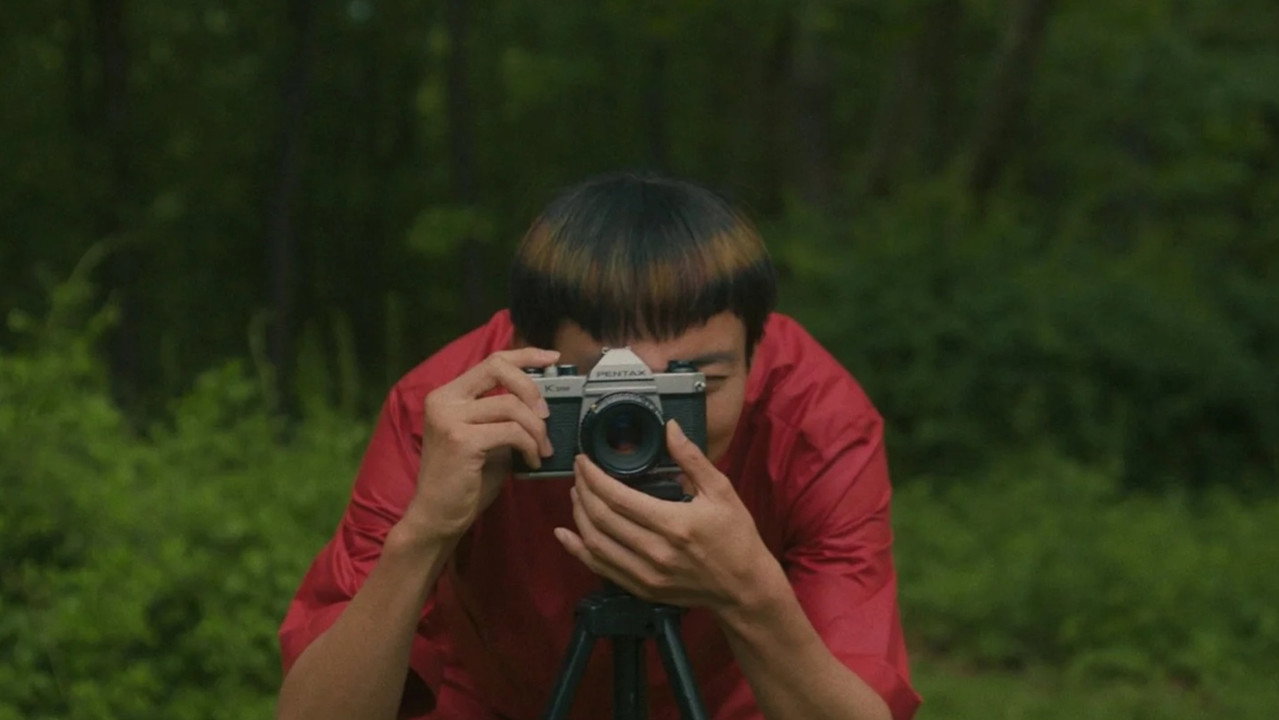
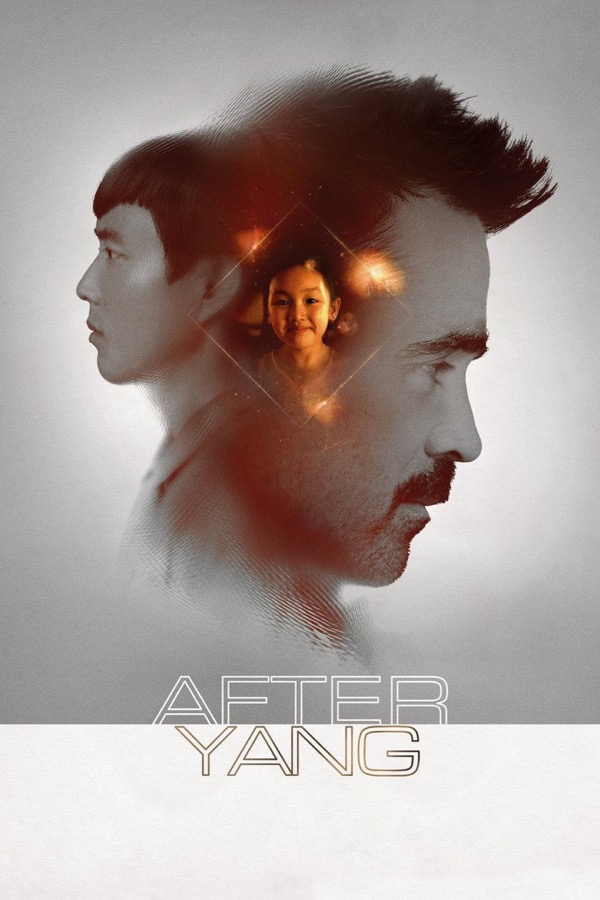
The family robot that dies with its bankrupt maker, and the device that kept more than anyone was told, are already history; the clone and the fully realised android sibling are not.
Jake sells tea. Not very much of it, because the shop is struggling, but he is plainly the sort of man who would open a tea shop: someone in love with leaves, water and waiting. Then the household android stops working, and Jake, who has built a life around slowness, has to learn very quickly how fast technology moves on without you.
Kogonada's second feature, after Columbus (2017), is a film about a machine that loves a family, and almost nothing happens in it. That's the point and the pleasure. It's also, five years after it premiered at Cannes, one of the most accurate films anyone has made about what living with AI actually feels like. It's sad rather than frightening, and mostly it's admin.
The art: grief in a well-lit room
The family is Jake (Colin Farrell), Kyra (Jodie Turner-Smith) and their adopted daughter Mika (Malea Emma Tjandrawidjaja). The fourth member is Yang (Justin H. Min), a "technosapien" they bought refurbished so Mika would have an older brother who could teach her about her Chinese heritage. The film opens with the four of them in an online dance contest against families around the world, a deadpan, delightful credits sequence shot against a bluescreen that Kogonada has called a homage to a Shaw Brothers kung fu film. Then Yang freezes, and the music stops.
What follows is a repair story. Yang came to them refurbished, through a company called Second Siblings that has since gone out of business. The official repairers want to replace his core, at a price. A backstreet technician, Russ (Ritchie Coster), opens him up, finds what looks like a hidden camera and assumes the worst. A museum specialist tells Jake what it actually is. Yang has a memory bank, keeping a few seconds at a time of whatever he judged worth keeping, and the manufacturer had long denied it existed.
From there the film becomes a man in a pair of glasses watching someone else's memories. They are lovely. Sunlight through leaves, Kyra laughing, Mika asleep, a young woman (Haley Lu Richardson) who keeps reappearing. Benjamin Loeb's camera treats every room as if it had been designed by someone who loved wood and hated clutter, and Kogonada, who also edited the film, lets the memory fragments arrive out of order and unexplained, as memories do. The score, by Aska Matsumiya with Ryuichi Sakamoto, one of his last before his death in 2023, sits almost under the threshold of hearing. Mitski's cover of "Glide", from Shunji Iwai's All About Lily Chou-Chou, does a lot of the film's crying for it.
Farrell is wonderful, all hesitancy and good manners, a man who hasn't had a feeling he couldn't manage until now. Min is better still. He has to play a character who is mostly absent, a body that won't switch on and a few seconds of footage, and he makes Yang feel like the most present person in the film: watchful, polite, quietly keeping things. The film cares less about whether he was conscious than about whether he was happy, and whether anyone thought to ask.
The weaknesses come from the same place as the strengths. The film is so calm that it can feel embalmed. The world-building is rationed so tightly that you're never sure why clones are commonplace or what event the film's peaceful society is recovering from, and some viewers will find the restraint precious rather than moving. The Ada mystery, once solved, explains less than the film wants it to. But the last ten minutes, with Mika singing a song she heard in Yang's memories, are as good as anything in recent American cinema.
The prophecy: the end-of-life plan
Most AI films predict the machine's rise. After Yang predicted its death, and how the paperwork would go. That turned out to be the more useful prediction.
The bankrupt sibling. Yang breaks down, and the company that sold him is gone. In December 2024 Embodied, which sold a $799 robot called Moxie meant to help children with social difficulties, shut down after a funding round collapsed. Moxie needed the company's cloud servers to function, so the robots were expected to stop working. Parents had to explain to their children why their robot was about to stop working. The OECD logged it as an AI incident. Kogonada had already filmed the scene: the warranty that doesn't apply, the repairer who wants a new model, the family left with a body they can't fix.
The secret recorder. Yang's memory bank is a recorder the manufacturer never admitted to, and the first person to find it assumes it's spyware. That was a sound guess. In 2019 contractors grading Siri recordings reported hearing drug deals, medical details and people having sex. In 2022 images taken by development Roomba units, including one of a woman on the toilet, turned up on Facebook after passing through a data-labelling supply chain. The film's twist is the generous version: the hidden archive turns out to be full of tenderness. Real devices keep the wrong things. Yang kept the light on the leaves.
The sibling in the house. A general-purpose humanoid that lives with a family is closer than in 2021 but not close. Figure's third-generation robot, unveiled in October 2025, was built with "the home" among its stated targets, with soft coverings and wireless charging. The same company's robots proved themselves loading sheet metal at a BMW plant. Nobody's machines are teaching anybody's daughter about her heritage.
The clones. Ada is a clone and nobody minds. Primates were cloned in 2018 and you can buy a cloned dog. Human cloning remains legally and ethically shut, and the film doesn't spend a second arguing otherwise. It's the one piece of furniture in this world that hasn't been delivered.
What Kogonada saw was that the first deep relationships with machines would end badly not because the machines turned on us but because the businesses behind them would fold, upgrade or forget. The emotional risk of AI companionship turned out to be the shutdown email.
The reading
After Yang is quiet, beautiful, occasionally too pleased with its own stillness, and wiser than almost any louder film about artificial minds. In the end the family donate Yang's body to a museum and keep his memories, and that turns out to be the whole argument. What's worth saving from a machine that loved you is the few seconds it chose to keep.
What it predicted, and what happened
Kogonada's quietest predictions came true first: a family machine that dies when its maker goes bust, and a household device that turns out to have been keeping more than anyone was told. The clones and the fully realised android sibling remain fiction.
-
YANG-1
A companion robot bought for a child stops working because its manufacturer has gone out of business, leaving the family to grieve it.
Yang was refurbished from a company that no longer exists. In December 2024 Embodied, maker of the Moxie robot for children, shut down; the cloud-dependent robots were expected to stop working, and parents had to explain the loss to their children. The film's grief, its repair-shop runaround and its defunct manufacturer all have real counterparts. 12
-
YANG-2
A household device secretly records intimate moments, and the footage or audio is retained in ways owners were never told about.
Yang's memory bank is a recorder its maker never admitted to. In 2019 contractors grading Siri recordings reported hearing confidential conversations, and in 2022 images taken by development Roomba units, including one of a woman on the toilet, leaked from a data-labelling supply chain. The film's version is gentler: Yang kept the beautiful moments. 34
-
YANG-3
Human clones live ordinary lives among us.
Ada is a clone and nobody in the film blinks. Primates were cloned by somatic cell nuclear transfer in 2018, and pet cloning is a commercial service. But human reproductive cloning faces near-universal legal and ethical barriers and no credible programme. The barrier is mostly social, so the range is very wide. 56
-
YANG-4
A general-purpose humanoid robot lives in the family home as a member of the household.
Humanoid makers now design explicitly for the home, with soft coverings, wireless charging and voice. But their first real deployments are on factory lines, and nothing on sale comes close to Yang's tact, let alone his inner life. 78
- FOR Networked children's robot Moxie AI dies because company is bankrupt. heise online, 2024-12-11. Moxie, meant to help children with social difficulties, goes offline when its maker fails.
- FOR Embodied Shutdown Bricks Moxie AI Robots, Families Suffer. OECD.AI Incidents Monitor, 2024-12-09. Logged as an AI incident because of the harm to the families who depended on the robots.
- FOR Apple contractors 'regularly hear confidential details' on Siri recordings. The Guardian, 2019-07-26. A whistleblower reports contractors hearing drug deals, medical details and sex in accidental Siri activations.
- FOR A Roomba recorded a woman on the toilet. How did screenshots end up on Facebook?. MIT Technology Review, 2022-12-19. Images from development robot vacuums passed to labellers and leaked online. iRobot said testers had agreed to the recording.
- CONTEXT First monkeys cloned with technique that made Dolly the sheep. Nature, 2018-01-24. Chinese scientists clone macaques, the first primates cloned by somatic cell nuclear transfer.
- FOR Pet Cloning & Preservation | ViaGen Pets. ViaGen Pets, 2023-07-26. Animal cloning is sold as a consumer service, which normalises the idea, if not the human case.
- FOR Introducing Figure 03. Figure AI, 2025-10-09. A third-generation humanoid designed 'for Helix, the home, and the world at scale'.
- CONTEXT F.02 Contributed to the Production of 30,000 Cars at BMW. Figure AI, 2025-11-19. The same company's humanoids proved themselves loading sheet metal on a car line, not raising children.
Ledger updated 1 Nov 2026. See it on the Nearness Board · Method