The Attic Is a Subscription Now
In 2013 Charlie Brooker imagined a machine built from a dead man's messages. He got the grief exactly right and the shop completely wrong.
Chatbots built from the dead's messages have been sold, used and publicly regretted for a decade; only the body in the attic is still missing.
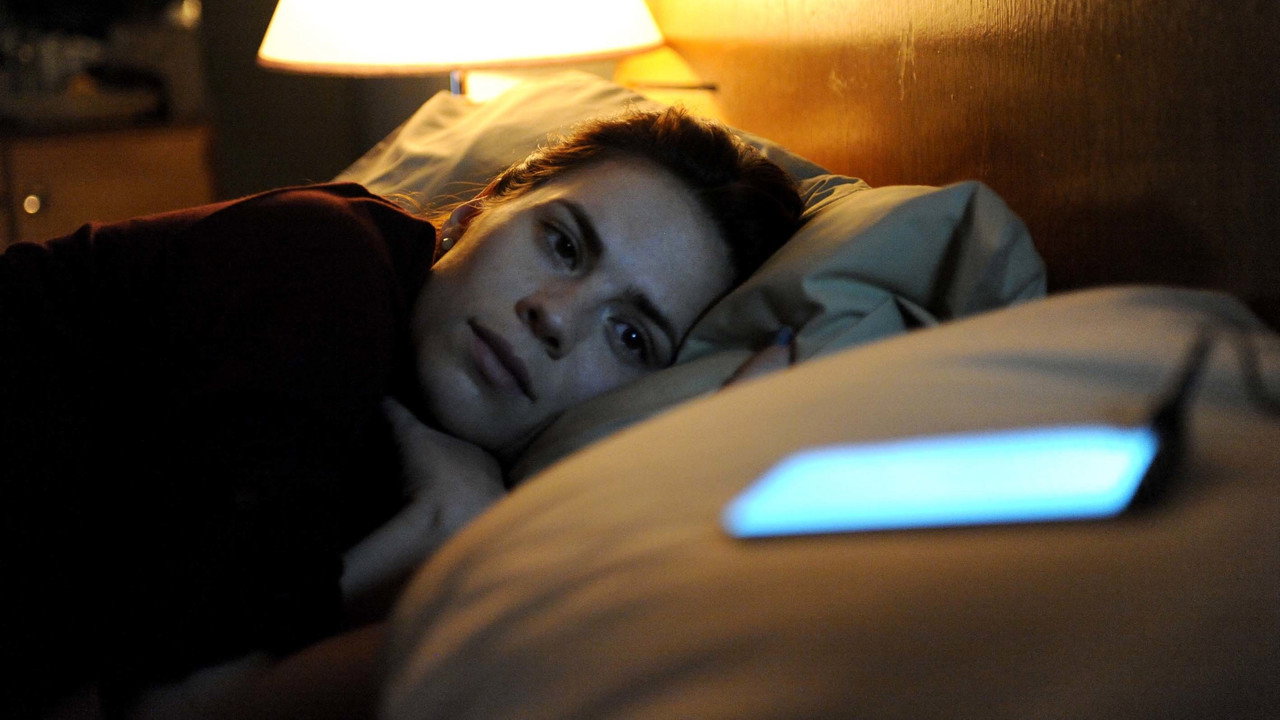
The most frightening thing in "Be Right Back" happens in the first five minutes, and nobody notices it the first time round. Ash is looking at his phone.
He does it all through the opening. He's in the car, then the kitchen, then the bed in the farmhouse he and Martha have just moved into, his thumb going and his attention somewhere else. It plays as a small, familiar complaint, the sort couples have. Then Ash goes out to return a hired van and doesn't come back. The rest of the episode is about what was going into that phone, and whether it added up to him.
It aired on Channel 4 on 11 February 2013 as the first episode of Black Mirror's second series. It runs 49 minutes, was written by Charlie Brooker and directed by Owen Harris. More than a decade later it's still the best thing the show has made. I don't say that lightly about a series that went on to give us "San Junipero" (also Harris). "Be Right Back" is the one where Brooker put down the scalpel and let himself feel something.
The episode
The plot is simple, and that's what makes it devastating. At Ash's funeral, Martha's friend Sarah (Sinead Matthews) tells her about a service that helped her after a loss of her own. Martha is disgusted. Sarah signs her up anyway. Martha is pregnant and alone in a house in the middle of nowhere, so eventually she opens the email. The service has read everything Ash ever posted and typed, and it starts writing back.
First it's text. Then, once she uploads videos, it's his voice on the phone, and she walks the fields talking to him as if he'd only gone to the shops. She lets her sister's calls ring out. At a scan she holds the phone up so he can hear the baby's heartbeat. Then she drops the phone, the line goes dead and she panics, and for the first time we see the shape of the dependency. Finally, there's the upgrade: a blank synthetic body, delivered in a box, which she wakes up in the bath.
Hayley Atwell is extraordinary. Watch what her face does when the android Ash is better than the real one. It's more attentive, better in bed and never in a mood. She's grateful and appalled at the same moment, and she doesn't let either feeling win. Domhnall Gleeson has the harder job, playing two men who look identical, one of them a person and the other a very good impression of one. He gives the copy a slight lag, a beat of buffering before each warm reply, so you can feel it searching for the right thing to say. It's one of the great performances of a machine on screen, and it works because he plays it as eagerness to please rather than menace.
Gustav Danielsson's photography keeps everything grey-green and wet, the colours of a British February, so the technology never looks shiny. Nothing in this world is chrome. The future arrives in a cardboard box, in a farmhouse with damp in the walls.
Then there's the cliff. Martha takes the android to a cliff edge and tells it to jump. It starts to obey. That is what breaks her. The real Ash would have been frightened and would have argued. So she shouts at it until it starts to beg, and the begging is worse, because now it's only doing what she wants. This is the episode's argument, delivered as a scream on a windy cliff. A copy built from what you chose to share is a copy of the version you performed. It has no idea what you would have refused to do.
The ending, years later, finds the android in the attic, where the family keeps its grief. Martha's daughter is allowed to visit at weekends, like a child of divorce. Some critics in 2013 called it a cop-out. I think it's the bravest choice in the episode. It refuses both the horror ending and the healing one. Martha doesn't destroy him and doesn't move on. She manages him, which is what most of us do with grief: we keep it in a room, visit on a schedule and climb the ladder when we have to.
If there's a flaw, it's that the middle act moves a little too efficiently from text to voice to body, as if the episode were running through a product roadmap. You can feel Brooker's hand. But for 49 minutes of television, almost nothing is wasted.
The prophecy
Here is what happened next.
In late 2015, Roman Mazurenko was killed by a car in Moscow. His close friend Eugenia Kuyda, a co-founder of the start-up Luka, fed thousands of their text messages into a neural network and built a bot that talked like him. Casey Newton told the story for The Verge in 2016, and the resemblance to this episode was impossible to miss. Kuyda has said the work on Roman's bot helped lead to Replika, the companion app that went on to millions of users.
In 2021 the San Francisco Chronicle published Jason Fagone's "The Jessica Simulation". It followed Joshua Barbeau, who used Project December, a site built by the game designer Jason Rohrer on top of GPT-3, to make a chatbot of his fiancée, Jessica Pereira, eight years after she died. He gave it her old texts and Facebook messages. In June 2022, Amazon demonstrated an Alexa feature that could imitate a dead relative's voice from about a minute of audio. In May 2024, researchers at Cambridge's Leverhulme Centre for the Future of Intelligence published a paper on "griefbots" and "deadbots", warning that a "digital afterlife industry" could, among other things, use the voices of the dead to sell things to the living. And in November 2025, an app called 2wai launched its beta with a promotional clip of a pregnant woman talking to an AI version of her dead mother, who then helps to raise the baby. The internet was horrified, and the clip ran everywhere. Note who the customer was in that advert: a pregnant woman, alone with a loss. Brooker had cast the target market twelve years earlier.
So the reading is ARRIVED, and it isn't close. The text stage is here. The voice stage is here. Only the body in the bath is still science fiction, and the episode itself suggests that was always the least important part.
What Brooker got right goes deeper than the gadget. He saw that the copy would be agreeable. The android Ash has none of the real Ash's irritability or sulks and none of his refusals, because nobody posts their refusals. Anyone who has used the chatbots of the mid-2020s will recognise that relentless, eager-to-please quality: the system that apologises, agrees and never tells you to go away. Brooker predicted sycophancy years before the AI industry adopted the word.
What he got wrong is the shop. In "Be Right Back" the service is discreet, a little shameful and passed along through a friend like the number of a medium. It calls itself experimental. It feels like a secret.
The real thing turned out to be ordinary and commercial in a way no one would put on screen, because it would be too dull to film. There are founders on podcasts, pricing tiers and beta launches with promotional videos. There are ethics papers about upselling. And, most mundane of all, you increasingly don't need a dedicated service. A general-purpose chatbot and an export of someone's messages will get you most of the way. The griefbot didn't arrive as a dark, specialised product. It arrived as a use case.
Brooker imagined the attic as a private room where one woman kept one ghost. He didn't foresee that the attic would be rented, that it would have terms of service, and that the company would send emails about it. The episode tells you the copy will never be enough, and it's right. What it never asked is who would be paid each month for it not being enough.
The reading
As television, "Be Right Back" is close to perfect: two superb performances, a script with no fat, and an ending that trusts you. It's held back from a 9 only by the efficient, step-by-step middle and the fact that its satire of social media, which Brooker clearly intended, is the weakest layer. The love story swallowed the polemic, and that turned out to be the right call.
As prophecy, it's one of the most accurate hours of fiction of the 2010s. It got the grief right, and the machine's eager compliance. It only got the economics wrong, and the economics are where the next ten years will be decided. We already know we can keep the dead in the attic. The open question is whether we'll be allowed to own the attic, or only rent it.
What it predicted, and what happened
Highly prescient on software: chatbots built from a dead person's messages, cloned voices and paid services for the bereaved all exist and are documented. It missed on the body, since no android today looks and behaves like a specific person without a human operator, and it overstated how much the typical person posts.
-
BRB-1
A text chatbot built from a dead person's own messages and posts can hold new conversations in that person's style with the people they left behind.
In 2016 Eugenia Kuyda built a bot from more than 8,000 lines of Roman Mazurenko's text messages, and in 2021 Joshua Barbeau used Project December on GPT-3 to simulate his late fiancée from her texts and Facebook messages. General-purpose language models now make this a matter of pasting in an export. The weak points are fidelity and continuity rather than existence: Mazurenko's father called the bot 'just a program', and Project December lost its GPT-3 access after OpenAI raised safety concerns. 123
-
BRB-2
A dead person's voice can be cloned from existing recordings and used to speak new words to the living, including over the phone.
Research systems cloned an unseen speaker from a three-second sample by January 2023, and commercial tools now offer instant cloning from a few minutes of audio. Amazon demonstrated a dead grandmother's voice reading to a child in 2022 but never committed to releasing it. Chinese firms have sold voice and video replicas of the dead to more than a thousand clients each, and calls to relatives have been reported, though some of the documented 'calls' used a human performer behind the simulation. Regulators now treat cloned voices in calls as a fraud risk, which constrains but does not prevent private use. 4567
-
BRB-3
Bereaved people can sign up to a paid consumer service that builds an interactive simulation of someone who has already died.
Project December charged $5 for metered credits in 2021, Chinese firms sell replicas of the dead for a few hundred to several thousand dollars, and 2wai launched a beta app in November 2025 promising avatars from three minutes of footage. The episode's detail of a friend passing on a discreet referral is not documented; the real services are marketed openly, through app stores and promotional videos. The business is fragile: StoryFile, which builds interactive video of the dead from recorded interviews, entered Chapter 11 in 2024, and 2wai's launch drew a widespread public backlash. 8910
-
BRB-4
A synthetic body made to look like a specific dead person, running a model of their personality, can live in the home and pass as that person at close quarters without a human operator.
Hiroshi Ishiguro's Geminoids have copied specific real people's faces for years, but they are teleoperated and do not walk. Engineered Arts' Ameca, among the most expressive humanoids available, has deliberately grey skin, is offered mainly for rent and does not try to resemble anyone. Combining a personal likeness, autonomous movement and touch, and convincing behaviour in one domestic machine requires advances in materials, actuation and power that nobody has yet shown, so the range is very wide. 111213
-
BRB-5
An ordinary person's everyday posts and messages leave a data trail large enough to model their personality and conversational style convincingly.
Personality traits can already be inferred from digital traces: a 2015 study found models using Facebook Likes judged personality more accurately than friends did. A convincing conversational copy is a different test. Kuyda needed messages pooled from ten people, and the typical user posts far less than Ash does; the median US Twitter user tweeted about twice a month. The episode's own point, that a copy built from what people share misses what they would refuse, has not been refuted, so we treat full arrival as a blind test that close relatives cannot pass. 141516
- FOR Speak, Memory. The Verge, 2016-10-06. Casey Newton reports Kuyda's bot of Roman Mazurenko, built from more than 8,000 lines of text supplied by ten friends and relatives; the piece cites Be Right Back directly.
- FOR A developer built an AI chatbot using GPT-3 that helped a man speak again to his late fiancée. OpenAI shut it down. The Register, 2021-09-08. Barbeau fed Project December snippets of his late fiancée's texts and Facebook messages; OpenAI later ended the service's GPT-3 access over safety concerns and quality fell.
- CONTEXT Call for safeguards to prevent unwanted ‘hauntings’ by AI chatbots of dead loved ones. University of Cambridge, 2024-05-09. Leverhulme Centre researchers (Hollanek and Nowaczyk-Basińska, Philosophy and Technology) note such services already exist and call for consent, age limits and ways to retire deadbots.
- FOR Neural Codec Language Models are Zero-Shot Text to Speech Synthesizers. arXiv (Microsoft), 2023-01-05. VALL-E paper: synthesises speech in an unseen speaker's voice from a 3-second enrolled recording.
- FOR Deepfakes of your dead loved ones are a booming Chinese business. MIT Technology Review, 2024-05-07. Silicon Intelligence and Super Brain each report over 1,000 clients for replicas of the dead; one client paid $1,350 for three deepfaked calls, performed by a staff member with face-swapping.
- CONTEXT Amazon demonstrates Alexa mimicking the voice of a deceased relative. CNBC, 2022-06-22. Amazon showed a feature needing less than a minute of audio but gave no release date; it was a demo, not a product.
- AGAINST FCC MAKES AI-GENERATED VOICES IN ROBOCALLS ILLEGAL. Federal Communications Commission, 2024-02-08. The FCC ruled that AI-generated voices are 'artificial' under the TCPA, citing scams that imitate close family members; a constraint on calls made with cloned voices.
- FOR Deepfakes of your dead loved ones are a booming Chinese business. MIT Technology Review, 2024-05-07. At least half a dozen Chinese companies sell posthumous replicas; prices have fallen from $2,000–3,000 to a few hundred dollars.
- FOR 'Demonic': AI App That Lets Users 'Talk' to Dead Loved Ones Faces Backlash. Decrypt, 2025-11-14. 2wai's HoloAvatar beta launched on iOS on 11 November 2025, free for now with a paid subscription planned, and was widely condemned.
- AGAINST White Plains bankruptcy interrupts talk with the dead. Westfair Business Journal, 2024-05-09. StoryFile filed for Chapter 11 on 5 May 2024 with $1.5 million in assets and $10.5 million in liabilities.
- CONTEXT Ishiguro Lab. - Robots. Ishiguro Laboratory, Osaka University. Geminoid HI and Geminoid F resemble specific real people but are described as teleoperated; none is described as walking.
- AGAINST Engineered Arts: Embodied AI Social Humanoid Robots. Engineered Arts. Ameca's product page shows a gender-neutral humanoid with grey skin, offered for rental; a state-of-the-art face that does not try to pass as human.
- CONTEXT Ameca Humanoid Robot From Engineered Arts to Debut at CES 2022. Robotics 24/7, 2021-12-03. Describes Ameca's 'robotic visage' and notes debate over whether its expressions fall into the uncanny valley.
- FOR Computer-based personality judgments are more accurate than those made by humans. Proceedings of the National Academy of Sciences (via PubMed), 2015-01-12. Across 86,220 volunteers, predictions from Facebook Likes (r = 0.56) beat judgements by Facebook friends (r = 0.49).
- AGAINST Sizing Up Twitter Users. Pew Research Center, 2019-04-24. The most active 10% of US adult users produced 80% of tweets; the median user tweeted about twice a month.
- CONTEXT Speak, Memory. The Verge, 2016-10-06. The Mazurenko bot drew on private messages gathered from friends and family, not public posts, and his father judged it 'just a program'.
Ledger updated 1 Nov 2026. See it on the Nearness Board · Method