Rumour Has a Higher R
Steven Soderbergh's pandemic procedural is the most accurate film in our archive, and its accuracy is exactly where it went wrong.
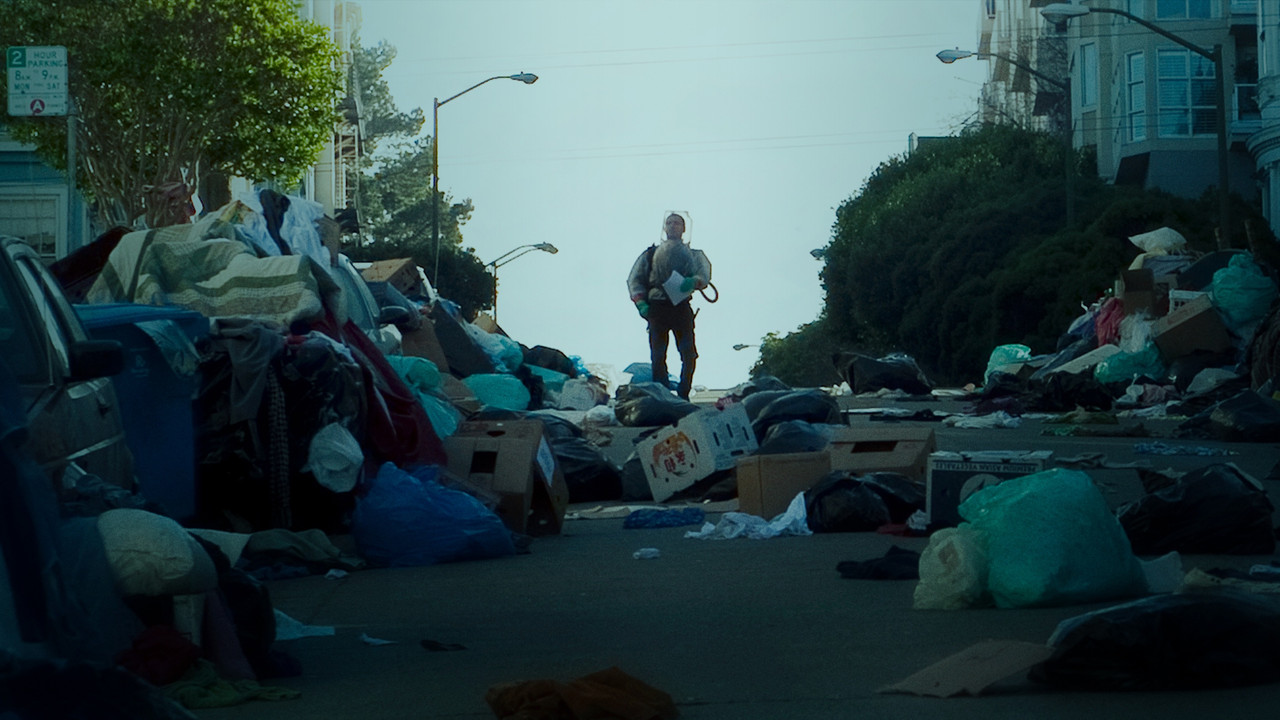
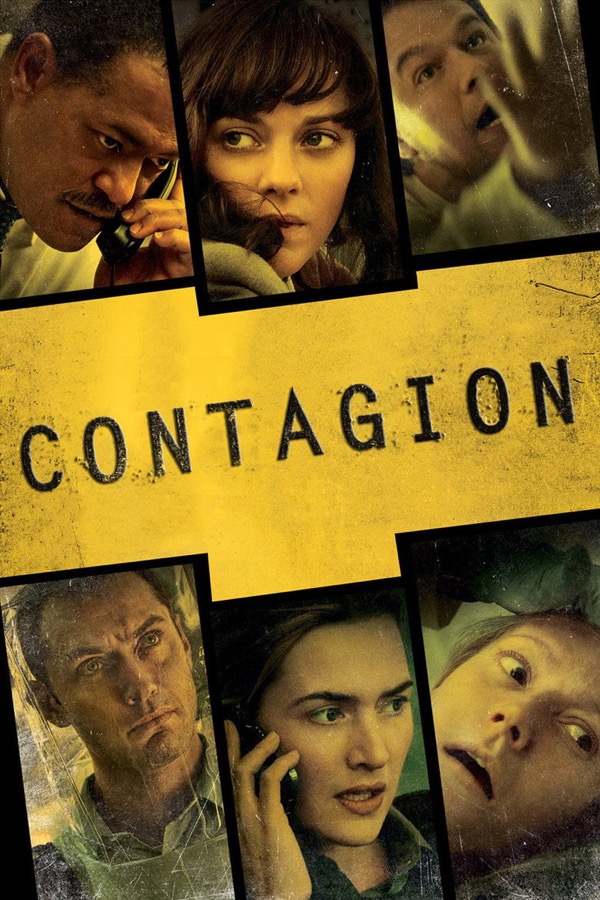
A bat-linked virus out of China, a vaccine in under a year, a bogus cure sold online and passes to get into venues all happened in 2020 and 2021, almost in the order the film showed them.
In February 2021 Britain's health secretary, Matt Hancock, explained why he had ordered far more Covid vaccine than his advisers had recommended. He'd watched Contagion, he said, and been struck by the scramble for doses. It may be the only time a Hollywood film has changed the vaccine procurement policy of a G7 country. It is certainly the only time the film deserved to.
Ten years earlier, Steven Soderbergh and the screenwriter Scott Z. Burns had set out to make a pandemic thriller that "really felt like what could happen". Burns read Laurie Garrett's The Coming Plague, sat with Larry Brilliant, who helped eradicate smallpox, and was introduced by Brilliant to the Columbia virologist W. Ian Lipkin. He met people from the World Health Organization. Then the 2009 flu pandemic arrived mid-research and showed him the parts nobody writes about: who looks after the children when the schools shut, and what people start saying online. By March 2020 the film was one of the most popular titles on iTunes. Burns later said that people wrote to him asking how he'd known it would be a bat, or that people would talk about "social distancing". He didn't have a crystal ball, he said. He had good advice.
So, as prophecy, Contagion is a near-perfect score. As a film it's very good, and the interesting thing is how the first fact limits the second.
The art: a thriller with no villain and no hero
Soderbergh shot it himself, as he often does, under the name Peter Andrews, on RED digital cameras in Hong Kong, Chicago, Atlanta, London, Geneva and San Francisco. His rule was that the film could never cut to a city or a crowd that one of the characters hadn't been to. That's why it feels both enormous and intimate. A pandemic is a thing that happens in every city at once, and this film only ever shows you the one somebody's standing in.
The camera keeps lingering on the things infected people have touched, then waits for the next hand. Every surface becomes a suspect. Cliff Martinez's electronic score pulses under it like a raised heart rate. It's the most physically anxious film Soderbergh has made, and it makes you aware of your own hands.
The cast is starry and used ruthlessly. Gwyneth Paltrow, as Beth Emhoff, the businesswoman who flies home from Hong Kong via a layover with an old lover, is dead within the first act, and later we watch her scalp being peeled back at autopsy. Kate Winslet's Epidemic Intelligence Service officer, Erin Mears, does everything right, dies anyway and is buried in a mass grave. Matt Damon plays Beth's husband Mitch, naturally immune, who shuts his teenage daughter inside the house and spends the film being the audience. Laurence Fishburne is the CDC's Ellis Cheever, decent and compromised, who tips off his fiancée before a quarantine is announced. Jennifer Ehle, as a CDC scientist who tests the vaccine on herself and then visits her infected father, has the film's best scene and its quietest.
And then there's Jude Law as Alan Krumwiede, a conspiracy blogger who claims a herbal remedy, forsythia, cured him, and is paid by investors to keep saying it. Elliott Gould's university scientist delivers the film's sharpest line about him: "Blogging is not writing. It's graffiti with punctuation."
Here's the trouble. Soderbergh decided he wouldn't use corporate or political villains, and the film is admirably fair to institutions. CDC officials are tired professionals. The WHO is earnest. But a story needs someone to oppose, and the film hands that job to the blogger. Krumwiede ends up carrying the entire weight of human irrationality on one set of shoulders, and he's a cartoon. The fear, misinformation and distrust that drive half the plot are personified in one greasy man with a camera, when the film's own logic says they should be everywhere, like the virus. The flashback at the end, which walks the disease back from a bulldozer to a bat colony, a pig farm and a chef's unwashed hands, is elegant but too tidy. It's an answer, and pandemics don't come with one.
The prophecy: right about the virus, wrong about us
Tick it off. A novel virus spills over from bats via an intermediate animal and seeds itself through Hong Kong. In 2020 a new coronavirus with bat relatives spread out of Wuhan, and the WHO called it a pandemic on 11 March. Its origin is still contested: a 2024 analysis of samples from a Wuhan market found animals there that could have carried it, while the director of the FBI said in 2023 that his agency thought a lab leak most likely. In the film a vaccine arrives after months of work and is handed out by lottery on birthdates. In reality Britain approved the first Covid vaccine on 2 December 2020, and the first jab went into an arm six days later. People besieged pharmacies for forsythia. In the real thing, it was ivermectin, an antiparasitic drug that many people knew as a livestock dewormer, pushed online as a miracle cure on the back of bad science. Vaccinated people in the film wear wristbands to get back into public places. The EU's Digital COVID Certificate came into use on 1 July 2021.
What the film got wrong was the shape of the public. Contagion's virus kills a quarter of the people it infects, and society reacts the way societies do in disaster films: looting, empty shelves, a man with a shotgun at the door. COVID was much less lethal, and that made it far harder. It was serious enough to close the world and mild enough for millions to doubt it was there. The real fight wasn't over who got the vaccine first. It was over whether to take it at all, whether to wear a mask, and whether the experts were telling the truth. The film imagined misinformation as one man you could arrest for securities fraud. Real misinformation was a weather system. You can't put a weather system in handcuffs.
That's why I can't give Contagion a nine. It's a superbly made procedural with total faith that competence, given a bit of courage, will win. In the mid-2020s that faith looked charming. The virus was the easy part to predict. The people were the hard part, and the film gave them one face because it couldn't imagine a thousand.
The reading
Watch it for Soderbergh's hands-on-every-surface camera, for Winslet and Ehle, and for the shiver of recognition every five minutes. It's the most accurate film in our archive, and the most reassuring one, and those two things are in tension. Contagion predicted a pandemic perfectly. It just predicted it happening to a calmer species than us.
What it predicted, and what happened
Contagion is the most fully arrived future in our archive: every one of its central predictions happened within a decade, mostly in 2020 and 2021. Where it missed was the public. Its virus was far deadlier than COVID-19, its misinformation came from one blogger rather than an ecosystem, and the real fight was over trust in vaccines rather than access to them.
-
CON-1
A new virus linked to bats emerges in East Asia and becomes a global pandemic within months.
SARS-CoV-2, a coronavirus with close bat relatives, was first identified in Wuhan and declared a pandemic by the WHO on 11 March 2020. How it reached people is still disputed: a 2024 analysis of market samples identified animals that could have passed it on, while the FBI said in 2023 it judged a laboratory leak most likely. The pandemic itself arrived exactly as the film imagined; the clean bat-to-pig-to-chef chain did not. 123
-
CON-2
A vaccine against the new virus is developed, approved and being injected within a year of the outbreak.
The UK regulator approved the Pfizer-BioNTech vaccine on 2 December 2020, and mass vaccination began six days later, under a year after the virus was identified. The film's birthday lottery did not happen; countries prioritised by age and risk instead. 45
-
CON-3
Online influencers promote a bogus cure, and demand for it surges during the pandemic.
Ivermectin, an antiparasitic drug, was promoted online as a COVID-19 miracle cure on the strength of studies that independent scientists found riddled with errors or signs of fabrication, and the hype drove large numbers of people to take it. It was also properly trialled, which is the film's other half: real science testing the claim while the rumour outran it. The scale was larger and more decentralised than one blogger. 67
-
CON-4
Proof of vaccination is required to get back into public places.
The EU Digital COVID Certificate applied from 1 July 2021 until the regulation expired on 30 June 2023. Parts of the UK required a Covid pass for entry to nightclubs and large events before scrapping it, and England shelved its first nightclub scheme in September 2021 after opposition from venues and MPs. Arrived, contested, then retired. 8910
- FOR Archived: WHO Timeline - COVID-19. World Health Organization, 2020-04-27. On 11 March 2020 the WHO assessed that COVID-19 could be characterised as a pandemic.
- FOR COVID pandemic started in Wuhan market animals after all, suggests latest study. Nature, 2024-09-20. Reanalysis of market samples identifies several animal species that could have passed the virus to people.
- AGAINST FBI chief Christopher Wray says China lab leak most likely. BBC News, 2023-03-01. The FBI's view challenges the film's natural spillover story, which remains unresolved.
- FOR UK medicines regulator gives approval for first UK COVID-19 vaccine. GOV.UK (MHRA), 2020-12-02. The MHRA authorises the Pfizer-BioNTech vaccine.
- FOR Covid-19 vaccine: First person receives Pfizer jab in UK. BBC News, 2020-12-08. Mass vaccination begins in the UK.
- FOR Ivermectin: How false science created a Covid 'miracle' drug. BBC News, 2021-10-06. Independent scientists found serious errors or signs of fabrication in the trials behind the hype, which still drove large numbers of people to use the drug.
- CONTEXT Covid: Ivermectin to be studied as possible treatment in UK. BBC News, 2021-06-22. The drug was added to a large UK trial, showing the scientific route the film's CDC takes.
- FOR EU Digital COVID Certificate. European Commission. The certificate regulation applied from 1 July 2021 to 30 June 2023.
- FOR Covid passports: Where do I still need to use one?. BBC News, 2021-01-22. Explains the UK Covid pass schemes that required proof of vaccination or a negative test at nightclubs and large events, and their withdrawal.
- AGAINST England vaccine passport plans ditched, Sajid Javid says. BBC News, 2021-09-12. England dropped planned passes for nightclubs and large events.
Ledger updated 1 Nov 2026. See it on the Nearness Board · Method