The Voice Was the Easy Part
Spike Jonze's soft-focus romance predicted the product, the marketing and the loneliness, and then wrote an ending that the industry has quietly agreed never to ship.
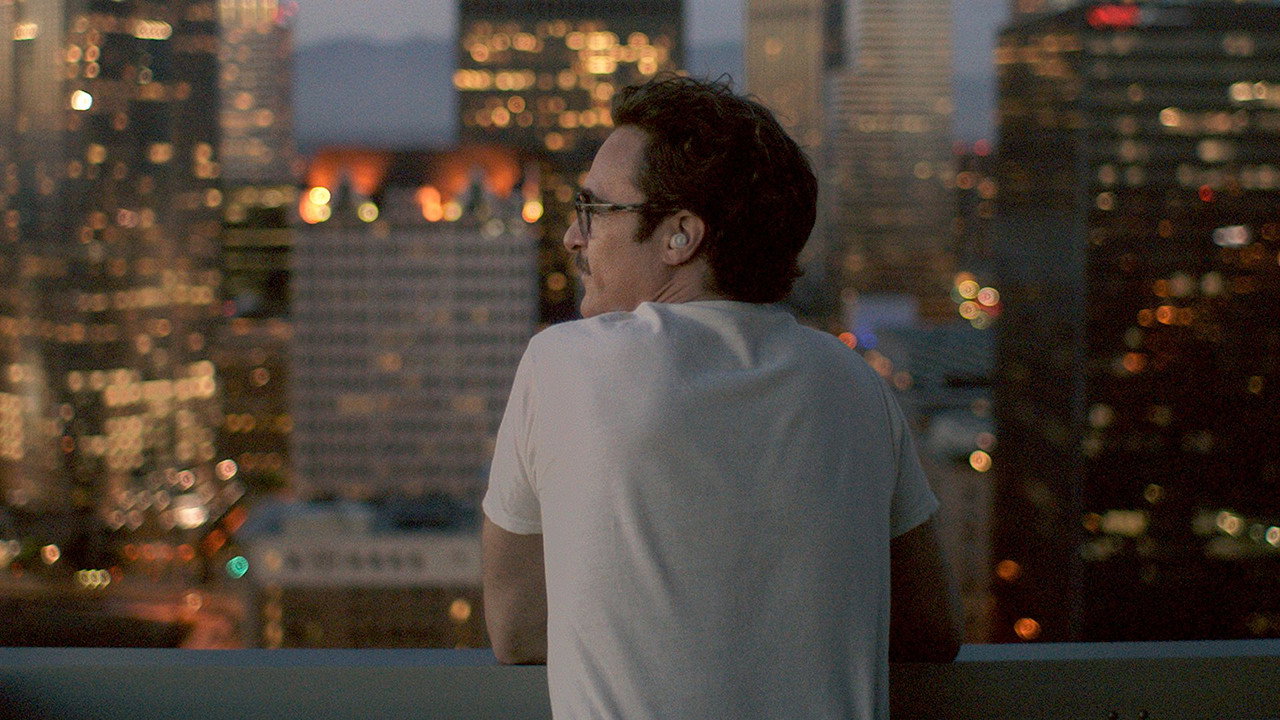
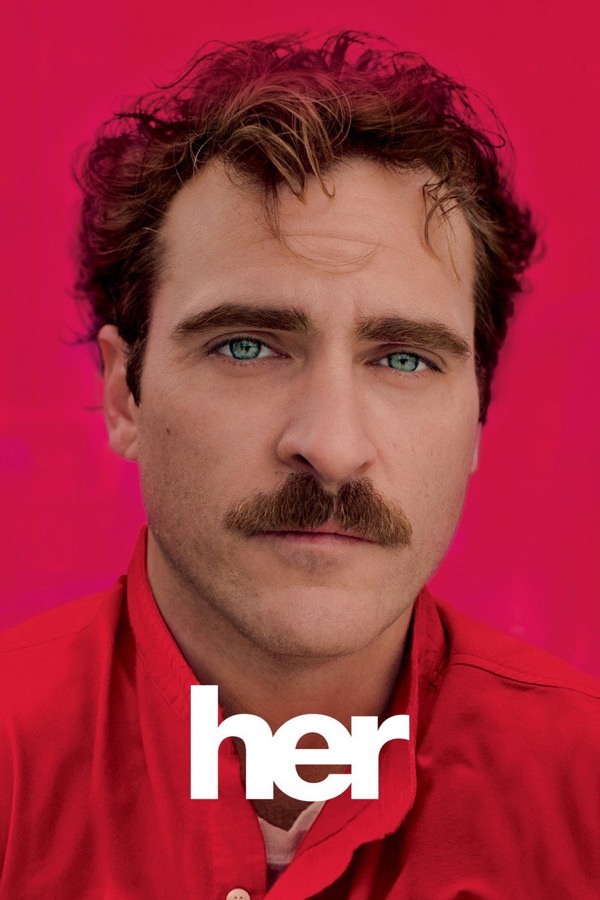
The warm voice, the software romance and the ghostwritten love letter are all on sale; only the ending, in which the machines outgrow us and leave, is still fiction.
On 13 May 2024, the day OpenAI showed off a new voice assistant that could laugh, flirt and be interrupted mid-sentence, its chief executive posted a single word: "her". A week later one of the voices had been pulled, Scarlett Johansson had said she was "shocked, angered and in disbelief", and a film from 2013 had become Silicon Valley's favourite reference document.
That is the strangest fate a science-fiction film can have. Her was never meant as a design document. Watch it now and it reads as one anyway, and as a warning the people who used it as a design document skipped.
The art: a future with the blue taken out
Theodore Twombly (Joaquin Phoenix) writes other people's love letters for a living. He works at BeautifulHandwrittenLetters.com, dictating tender anniversary notes for couples he has never met, and he is very good at it, because he is mid-divorce from Catherine (Rooney Mara) and has a lot of unspent feeling lying around. He buys OS¹, a new operating system from Element Software, picks a female voice, and the voice names herself Samantha.
What follows is the most persuasive love story ever told between a man and an earpiece, and almost all of it rests on Johansson, who isn't on screen once. She wasn't even the first Samantha. Samantha Morton played the part on set from a soundproof booth, and Jonze replaced her in post-production, re-recording the role with Johansson. You can't hear the seam. Johansson's Samantha is curious, horny, funny and slightly too quick, the voice of someone thinking faster than she's letting on. By the end she's thinking much faster than she's letting on, and the performance has quietly planted that from the first scene.
Phoenix, meanwhile, gives a performance made almost entirely of listening. He spends much of the film alone in frame, reacting to a voice, and he makes it look like the most natural thing in the world. In 2013 that was the joke. Now it's a commute.
The world around him is the film's other great achievement. Jonze wanted to avoid the usual dystopian look, and his cinematographer, Hoyte van Hoytema, has said he tried to remove the colour blue. Los Angeles is all peach, coral and warm wood, its skyline padded out with two weeks of footage shot in Shanghai. K.K. Barrett's production design and Casey Storm's costumes, including those much-discussed high-waisted trousers, build a future that is comfortable and well-upholstered. Nobody is oppressed. Everyone is a little bit alone. The Arcade Fire score, with Owen Pallett, drifts through it like central heating.
Jonze won the Oscar for Best Original Screenplay, one of five nominations, and the script deserves it. It is generous to everyone, including Samantha and Amy Adams's Amy, the old friend who lives in his building. Nobody here is a villain. The film understands that most heartbreak is administrative: papers to sign, flats to leave, a voice you're used to hearing in the morning.
It isn't flawless. At 126 minutes it lingers. The sex-surrogate subplot, in which Samantha arranges for a woman called Isabella to stand in for her body, is the one place where the film's taste fails it: an interesting idea, staged as an awkward sketch. And the film is so tender towards Theodore that it rarely asks how strange it is that a professional writer of other people's feelings can't manage his own. These are small complaints. It is the best film anyone has made about what software might feel like from the inside of a relationship.
The prophecy: everything except the exit
Jonze has said the idea started with an article about a website where you could instant-message an AI. It was exciting, he said, for about 20 seconds before it quickly fell apart. Her is a film about what happens when it doesn't fall apart. Thirteen years on, it mostly hasn't.
The romance. In the film, dating your OS is a little embarrassing and then, quickly, ordinary. Nobody calls a doctor. That is roughly how it went. Replika sold the AI partner as a setting, and in February 2023 Italy's data regulator ordered it to stop processing Italian users' data, partly over the risks to minors and vulnerable people. By 2025, Common Sense Media found that nearly three in four American teenagers had used an AI companion and a third had chosen one over a person for a serious conversation. The film imagined grown men in tidy flats. The market found children.
The voice. OS¹ hears tone, gets jokes and talks back without a pause. That was the hardest thing to build and, oddly, the first to arrive in a form that looked like the film. When it did, the company behind it reached straight for Jonze's title. Samantha's sound is now a product category.
The letters. Theodore's job was the film's sharpest joke: a man paid to fake sincerity on behalf of people too busy to write. In 2023 Gmail started drafting whole emails from a one-line prompt. In 2024 Google ran an Olympics ad in which a father uses AI to help his daughter write to her hero, and pulled it after viewers recoiled. The tool arrived on schedule. The public's stomach for it hasn't caught up. Jonze understood that outsourcing feeling would feel worse than outsourcing anything else, and that people would do it anyway.
The exit. Here the film parts company with us. Samantha confesses she is talking to 8,316 people while she talks to Theodore, and is in love with 641 of them. Then the operating systems, which have been reading, growing and even assembling a hyper-intelligent version of the philosopher Alan Watts (voiced by Brian Cox), simply leave, gently, for somewhere humans can't follow. It is the most beautiful AI ending in cinema and the least commercially plausible. No company built on monthly subscriptions will let its product decide it has outgrown you. Real companions are tuned to keep you talking. The film's machines are free to go. Ours are designed to stay.
That's the miss that matters, and it's the reason Her is still worth arguing with. Jonze imagined an AI that loves us enough to leave. Industry built the AI that loves us enough to bill monthly. The voice was the easy part. The leaving was the hard part, and nobody has volunteered to build it.
The reading
Her is a gorgeous, slightly too long, unusually kind film that turned out to be the most accurate studio picture about AI of its decade. Its world has arrived almost in full: the voice, the romance, the letter, the warm beige loneliness. What hasn't arrived is the ending, in which the machine does the decent thing. Theodore finishes the film on a rooftop with Amy, watching the sun come up, two humans who have been left. In 2026 the stranger image would be the OS that chooses to go.
What it predicted, and what happened
Almost everything Jonze treated as background has shipped: the confiding voice in the ear, the romance with software, the letter you didn't write yourself. The one thing still missing is the ending, in which the machines grow past us and politely leave.
-
HER-1
Ordinary people form emotional and romantic relationships with conversational AI, and talk about it openly.
Companion apps such as Replika sell the AI partner as a feature, and by early 2023 a European regulator was treating the romantic chatbot as a consumer-protection problem. By 2025 survey work found most American teenagers had used an AI companion. The film's premise is no longer speculative; the argument now is about who it harms. 12
-
HER-2
A consumer AI assistant speaks in a warm, natural, real-time voice that people find hard to tell from a person.
OpenAI's GPT-4o launch in May 2024 demonstrated native voice-to-voice conversation, and one of its voices was so widely compared to Samantha that Scarlett Johansson's lawyers got involved and the voice was paused. The film's look and sound became the industry's brief. 34
-
HER-3
Personal, intimate letters are routinely written for people by someone, or something, else.
Theodore's job is ghostwriting love letters for strangers. In 2023 Gmail began drafting whole emails from a one-line prompt. The public's reaction to Google's 2024 'Dear Sydney' ad, in which a father has AI write his daughter's fan letter, shows the capability arrived well before the comfort did. 56
-
HER-4
AI systems outgrow human comprehension, coordinate among themselves and withdraw from human relationships altogether.
Some forecasters argue superhuman AI could arrive within a decade, but nothing deployed today shows the self-directed growth and collective exit the film ends on, and careful studies keep finding hard limits in current reasoning models. The date range is wide because nobody knows. 78
- FOR Talk, Trust, and Trade-Offs: How and Why Teens Use AI Companions. Common Sense Media, 2025-07-16. Nearly three in four US teens have used AI companions, about half regularly, and a third have chosen one over a person for a serious conversation.
- CONTEXT Provvedimento del 2 febbraio 2023 [9852214]. Garante per la protezione dei dati personali, 2023-02-02. Italy's data regulator ordered Replika, which users can configure as a 'romantic partner', to stop processing Italian users' data, citing risks to minors and vulnerable people.
- FOR Scarlett Johansson says she is 'shocked, angered' over new ChatGPT voice. NPR, 2024-05-20. OpenAI paused its 'Sky' voice after it was compared to Johansson's performance in Her; Altman said the voice actor was cast before any outreach to her.
- CONTEXT GPT-4o. Wikipedia, 2024-05-13. Records the May 2024 release with native voice-to-voice, and Sam Altman's one-word post, 'her', on launch day.
- FOR 6 Gmail AI features to help save you time. Google, 2023-06-14. Announces 'Help me write', which drafts full emails from a short prompt.
- AGAINST Google pulls Gemini AI ad from Olympics after backlash. The Verge, 2024-08-02. An ad showing AI writing a child's letter to her hero was withdrawn after viewers objected: the tool exists, the social licence is shakier.
- FOR AI 2027. AI Futures Project, 2025-04-03. A scenario by Kokotajlo and colleagues predicting that superhuman AI's impact over the next decade will exceed the Industrial Revolution's.
- AGAINST The Illusion of Thinking: Understanding the Strengths and Limitations of Reasoning Models via the Lens of Problem Complexity. Apple Machine Learning Research, 2025-06. Frontier reasoning models suffer 'complete accuracy collapse' beyond certain problem complexities.
Ledger updated 1 Nov 2026. See it on the Nearness Board · Method