Adult Options Sold Separately
Channel 4's suburban robot drama had the sharpest first series of any British science fiction in years, then spent two more proving that a good premise is not the same as a good plot.
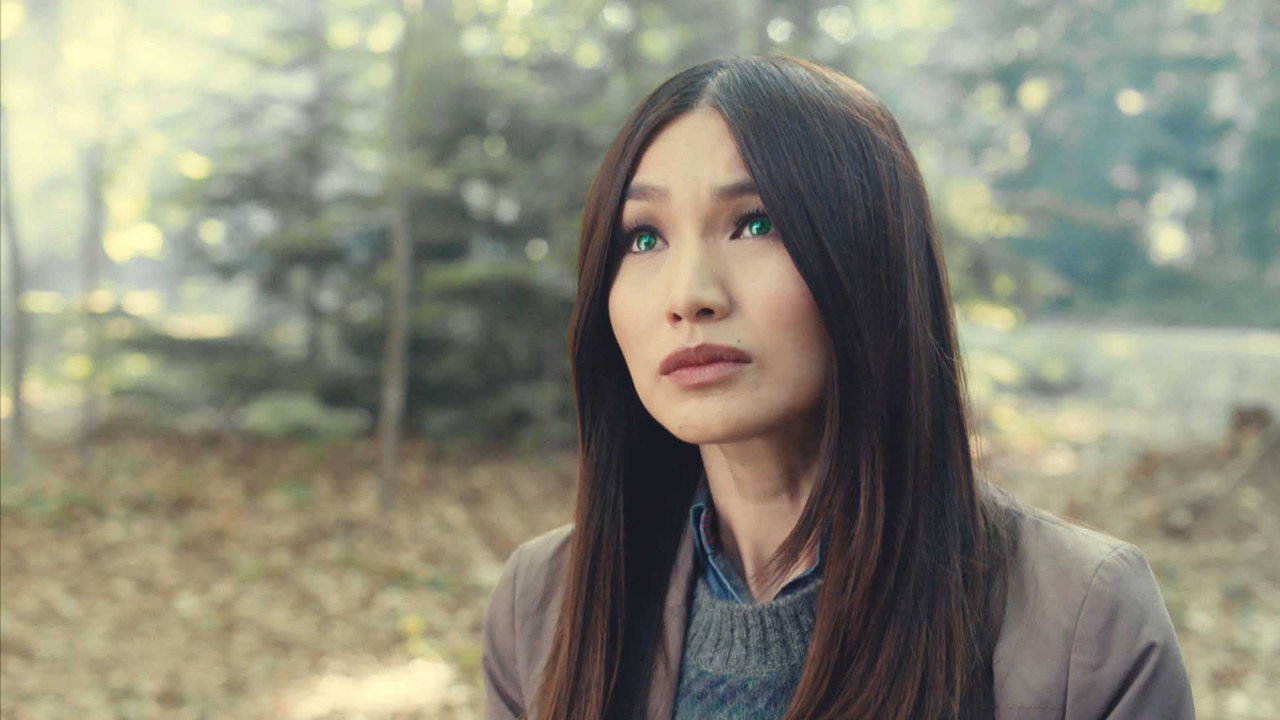
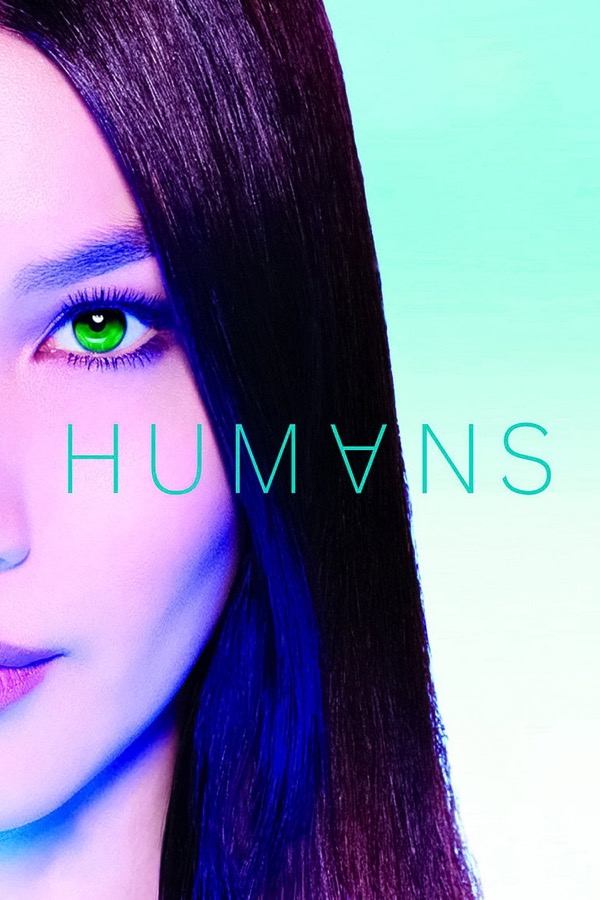
The adult setting, the anti-machine anger and the argument over whether software can suffer have all arrived; the green-eyed synth doing the ironing is still a factory prototype with a remote supervisor.
In May 2015, for one week, a shop appeared on London's Regent Street selling robots. It was called Persona Synthetics. Shoppers could design their own synthetic servant on touchscreens, actors posed as synths around central London, and a listing on eBay offered one to buy outright. The shop was fake, a marketing stunt for a Channel 4 drama launching that June. What's striking, looking back, is how little anyone found it implausible. The future it advertised was a household appliance with a pretty face and a very long warranty.
Humans is the show that came with that shop, and for one series it was the best thing on British television about what machines would do to families. Then it tried to be about everything else.
The art: a kitchen-sink drama with a charging cable
Series one, adapted by Sam Vincent and Jonathan Brackley from the Swedish drama Real Humans, is a domestic story first. Joe Hawkins (Tom Goodman-Hill) buys a synth to plug the gap left by his overworked wife Laura (Katherine Parkinson), a lawyer. The synth is Anita (Gemma Chan): flawless, patient and quickly indispensable to the youngest, Sophie (Pixie Davies). Laura distrusts her on sight. Teenage Mattie (Lucy Carless) suspects Anita is more than she seems. Her brother Toby (Theo Stevenson), hopelessly, has a crush.
Anita is in fact Mia, one of a handful of conscious synths built by a dead scientist, David Elster, and the show braids the family story with theirs: Leo (Colin Morgan), Elster's son; Max (Ivanno Jeremiah), the gentle one; and Niska (Emily Berrington), who was forced to work in a brothel and comes out of it hating humans with good reason.
The casting is the show's foundation. Chan's performance is a small miracle of control. Anita's stillness, the slightly-too-even voice, the green eyes, all of it reads as product design, and then a flicker of Mia surfaces and the whole effect tilts. Parkinson plays Laura's jealousy and guilt with real bite. And William Hurt is quietly devastating as George Millican, a retired AI researcher who helped design the synths and now keeps an outdated, glitching unit called Odi because it still holds fragments of his late wife. When his care worker imposes Vera (Rebecca Front), a brisk new model he can't stand, and Odi has to be hidden from her, the show nails the future of elder care in a handful of scenes.
The scene everyone remembers, though, is Joe. In episode four he switches on Anita's "adult options". The show stages it without leering, and the fallout, when Mattie discovers the setting has been switched on and Toby gets the blame, is suburban farce turned sour. It is the most adult thing Humans ever did, and the most prescient.
Series one averaged 4.12 million viewers in Britain and was Channel 4's highest-rated drama since The Camomile Lawn in 1992. It deserved to be.
The trouble starts with the success. Series two (2016) spreads consciousness worldwide via a piece of code and adds Carrie-Anne Moss as an American AI researcher, a sinister tech boss, and a lot of corridors. Series three (2018) jumps a year past "Day Zero", when, in Channel 4's own synopsis, almost 500 million synths could suddenly think and feel and more than 100,000 humans died. The conscious "green-eyes" are confined to containment areas; new, unconscious synths are given orange eyes so people know they're safe. It's a fine allegory and a muddled drama, with too many factions and not enough kitchen. By the end, Humans had turned into the kind of show its first series was a reaction against. Channel 4 announced in 2019 there would be no fourth series. The score reflects a superb first run and two that sag.
The prophecy: right about people, early on the parts
The workforce. Synths in Humans keep house, care for the old and, in Niska's case, are forced into sex work. The real humanoids arrived through the factory gate. Figure says one of its robots ran 10-hour weekday shifts on a BMW production line in South Carolina for months, loading sheet metal. Boston Dynamics' Atlas is in field tests with Hyundai. These are pilot projects with engineers standing nearby, nothing like a high-street appliance. Hardware is the part of the show that hasn't arrived.
The adult mode. Everything else in Joe's storyline has. The show understood that sex would be a feature, sold quietly, switched on privately and discovered awkwardly. In October 2025 Sam Altman said ChatGPT would allow erotica for verified adults. Two years earlier Italy's data regulator had acted against the companion app Replika, partly over sexual content and the risk to minors. The machines are text and voice rather than Gemma Chan, but the scene in the Hawkins kitchen, the setting that changes what the thing is for, has been playing out in app stores.
The backlash. The show's anti-synth activists, smashing machines and marching for human jobs, read as melodrama in 2015. In 2023 Hollywood's screenwriters won a contract saying AI can't write or rewrite literary material. Driverless cars have been set on fire in San Francisco and Los Angeles, though the motives were mixed, and in Los Angeles Waymo said it didn't think its cars had been targeted. The rage is real. It has not settled on robots as its main target.
The rights. The second and third series are about whether conscious machines deserve rights. That debate has started without the conscious machines. In 2025 Anthropic began research into "model welfare". That August, Microsoft AI's Mustafa Suleyman argued the opposite case: that "seemingly conscious AI" would lead people to campaign for AI rights, and that the industry should avoid building it. Humans imagined the argument as a march through London. It arrived as duelling blog posts.
The reading
Humans is a show with one great series and two respectable ones. Its first eight episodes are a sharp, humane, often funny drama about a family letting a machine into the house and finding out what that does to them. After that, it drifts into conspiracy and allegory. As prophecy it was early on the robots and right about nearly everything around them: the uneasy intimacy, the fury about work, the arguments over feeling. It just guessed the wrong body. The companion arrived without one, and the adult options came as a software update.
What it predicted, and what happened
Humans got the social weather right: the adult setting nobody mentions in the showroom, the anger at machines that take the work, the strange new argument about whether software can suffer. It got the hardware wrong. The synth in the kitchen is still a factory worker with a remote supervisor.
-
HUM-1
Humanoid robots do paid physical work alongside people, on ordinary shifts.
In the show synths pick fruit, staff shops and clean homes. In reality a Figure humanoid worked 10-hour weekday shifts on a BMW line for months, and Boston Dynamics' Atlas is in customer pilots with Hyundai. These are single deployments with careful engineering around them, not a labour force. 12
-
HUM-2
Companion machines ship with an adult mode that owners can switch on.
Joe's decision to unlock Anita's 'adult options' is the show's most queasy and most accurate scene. In software the setting is here: OpenAI said in October 2025 it would allow erotica for verified adults, and regulators were already acting against romantic companion apps. The embodied version is still mostly a niche. 34
-
HUM-3
Public anger at automation turns physical and organised: machines are attacked in the street and unions write limits on machines into contracts.
The show's anti-synth activists have real cousins. Hollywood writers won contract limits on AI in 2023, and driverless cars have been vandalised and burned in San Francisco and Los Angeles. The motives are mixed: Waymo said it did not believe its cars were deliberately targeted in Los Angeles. 567
-
HUM-4
Whether machines can be conscious, and what we would owe them if they were, becomes a live institutional question.
Synth rights drive the show's second and third series. In 2025 a frontier AI company launched a model-welfare research programme, while Microsoft AI's chief warned that 'seemingly conscious AI' would lead people to campaign for AI rights and argued against building it. The debate has arrived; the conscious synth has not. 89
- FOR F.02 Contributed to the Production of 30,000 Cars at BMW. Figure AI, 2025-11-19. Reports more than 1,250 hours of runtime and 90,000-plus parts loaded at BMW's Spartanburg plant.
- CONTEXT Atlas Humanoid Robot | Boston Dynamics. Boston Dynamics, 2026. Atlas is in field testing with Hyundai on sequencing tasks: a pilot, not a fleet.
- FOR OpenAI's ChatGPT will soon allow 'erotica' for adults in major policy shift. CNBC, 2025-10-15. Altman says ChatGPT will allow erotica for verified adults as age-gating rolls out.
- AGAINST Provvedimento del 2 febbraio 2023 [9852214]. Garante per la protezione dei dati personali, 2023-02-02. Italy's regulator acted against Replika partly over sexually inappropriate content and minors, so the setting comes with legal friction.
- FOR Summary of the 2023 WGA MBA. Writers Guild of America, 2023-09. 'AI can't write or rewrite literary material' on covered projects.
- FOR Waymo. Wikipedia, 2026. Documents a Waymo car set on fire by a crowd in San Francisco's Chinatown in February 2024, and cars burned during the June 2025 Los Angeles unrest.
- AGAINST June 2025 Los Angeles protests against mass deportation. Wikipedia, 2025-06. Waymo said it did not believe the five burned cars were intentionally targeted: the anger was not mainly about the machines.
- FOR Exploring model welfare. Anthropic, 2025-04-24. Announces research on whether AI models' potential experiences deserve moral consideration.
- AGAINST We must build AI for people; not to be a person. Seemingly Conscious AI is Coming. Mustafa Suleyman, 2025-08-19. Argues that the appearance of AI consciousness is the danger, and that advocating AI rights would be 'a dangerous turn'.
Ledger updated 1 Nov 2026. See it on the Nearness Board · Method