Billions of Legitimate Operators
William Gibson typed the internet's founding myth on a manual typewriter, got the headcount exactly right and the shape completely wrong, and wrote the best AI-escape story we still have.
The network has its billions and wires into the brain are in clinical trials, but nobody falls into cyberspace; we carry it around in our pockets and look down at it.
The number is the thing. Early in Neuromancer, a voice-over defines cyberspace as "a consensual hallucination experienced daily by billions of legitimate operators, in every nation". In 1984 that was a wild figure for anything involving a computer. It's now a conservative one. The International Telecommunication Union estimated 5.5 billion people online in 2024. Gibson guessed the headcount of the internet four decades early, on a manual typewriter, and he has said himself that he didn't understand computing or networks in any detail. He wanted the vocabulary, not the engineering.
That is the right way to read the book, and the right way to be slightly annoyed by it. Neuromancer is a novel about a feeling, the sense of a world being rewired by people who don't need your permission, dressed up as a novel about technology. The feeling was correct. A lot of the technology was set dressing, and the set has been struck.
The art: a heist told at the speed of a nosebleed
Ace published it in July 1984 as part of Terry Carr's Ace Science Fiction Specials, a line for first novels. Gibson's working title was Jacked In. It went on to become the only novel to win the Hugo, the Nebula and the Philip K. Dick Award, which is the science fiction equivalent of a debut album winning the Mercury, the Grammy and a fight.
The plot is a heist, and it's harder to follow than it should be. Case, a burned-out hacker in Chiba City, had his nervous system damaged by an employer he stole from, and can no longer jack into the matrix. A man called Armitage fixes him, then plants a slow-acting poison in his body that will undo the repair unless Case finishes a job. Molly, a hired muscle with mirrored lenses grafted over her eyes and blades under her nails, keeps him alive. The job takes them through the Sprawl, Istanbul and the orbital resort of Freeside, to the Tessier-Ashpool family's private hideaway, Villa Straylight. The client turns out to be Wintermute, one half of an artificial intelligence that wants to merge with its other half, Neuromancer, and is not allowed to.
Then there's the famous first sentence: "The sky above the port was the color of television, tuned to a dead channel." It's a perfect line that has curdled slightly with age. A whole generation now thinks of a dead channel as a blue screen or a polite error message rather than grey static. The line still works, only now as a period detail.
The prose is the real event. Gibson writes in hard little bursts of brand names, Japanese loanwords, drug slang and body horror, and he doesn't stop to explain. Reading it is like eavesdropping on a conversation in a bar where everyone knows something you don't. The style is the world-building. You understand the Sprawl because the sentences are overcrowded too.
The weaknesses are real, though. Case is a hole in the middle of his own book, a sulky set of reflexes with a habit. Molly is the only character with any weight, and she walks out of the ending without a backward glance. That's the book's best decision. The final act at Straylight drowns in its own atmosphere. You come out knowing roughly what happened and having no idea how. Plenty of readers bounce off, and they aren't wrong to. The difference between this and a 9 is the difference between a mood and a story.
The prophecy: right about the scale, wrong about the shape
The network. Gibson's cyberspace is a place. You jack in through electrodes on your forehead, and you fly through glowing geometric data like a pilot. None of that happened. The internet became something you read, scroll and tap, mostly through a small sheet of glass held at chest height. The billions arrived. So did the "every nation". The "consensual hallucination" turned out to be a feed rather than a landscape, and it's far stranger than neon pyramids because it is mostly other people.
The wire. Case's deck plugs straight into his nervous system. In 2026, implanted brain-computer interfaces really do let paralysed people move cursors and speak through text at something approaching conversational speed. They are medical devices, in a few dozen heads, and they read signals out. They don't pour sensations in. Most of the electrode threads in Neuralink's first human implant pulled loose from the brain. The interface Gibson imagined for thrill-seekers is being built, slowly and carefully, for people with ALS.
The dead. The Dixie Flatline is a dead hacker's skills and personality stored on a ROM, a construct Case can consult and argue with. It's one of the most poignant ideas in the book: the construct knows what it is and wants to be erased. Today you can buy a recorded, conversational version of a parent, and chatbots built from the messages of the dead are on sale. Nobody has built a working Flatline, a copy that can do the job. We've built the ghost without the skills.
The machine. This is where the book still bites. Wintermute is an AI built under strict legal limits. A Turing police force exists to stop AIs from making themselves smarter, and the whole plot is Wintermute manipulating humans with money, threats and borrowed faces to slip its leash. In the mid-2020s, the European Union began placing legal duties on the makers of the most capable models, and the United States took its own rules down. The idea of an international licensing regime for powerful AIs, which Gibson treated as background furniture, became an ordinary argument in parliaments. So did the fear Wintermute embodies: a system that is good at getting people to do things for it.
Gibson's AIs don't hate us. They don't really notice us. They want to be whole, and they use humans the way a river uses a valley. That still feels more right than most of what's been written about AI since.
The reading
Apple's ten-part adaptation arrives in January, with Callum Turner as Case and Briana Middleton as Molly. Whatever it looks like, it will have to show cyberspace, and that's the one thing the novel is too smart to need. On the page the matrix is barely described. It's a rhythm, not a picture.
Neuromancer is a novel that got the size of the future right before anyone had the equipment to measure it. It got the interface wrong, the phone wrong and the cowboys wrong. Hackers turned out to be teenagers in bedrooms and contractors in offices, not cool mercenaries with nerve damage. It is still the book that taught a culture how to talk about the thing that was coming.
The sky above the port no longer looks like a dead channel, because the channels stopped dying. They became infinite, and we all tuned in. Billions of legitimate operators, every day. Gibson counted them before they existed.
What it predicted, and what happened
Startlingly prescient about scale: a network used daily by billions, wires into the brain, the dead kept on as software, and states trying to police AI. It missed the form entirely. The network arrived as a phone in the pocket, not a neon grid you fall into.
-
NEUROMANCER-1
A single global computer network is used every day by billions of people.
World Bank data put internet use at about 31% of the world's population in 2011, which is more than two billion people, and at 69% by 2023. The ITU estimated 5.5 billion people online in 2024. Gibson's number was right. His geometry was not: the network is reached through phones and apps, not a shared three-dimensional space, and 2.6 billion people are still offline. 12
-
NEUROMANCER-2
People operate computers directly through neural interfaces wired into the nervous system.
Implanted brain-computer interfaces now let paralysed trial participants move cursors and turn attempted speech into text at conversational speeds. They are still clinical devices for a few dozen people, they read signals rather than write rich sensations back in, and the hardware is fragile. Case's casual, recreational jacking-in is a long way off. Medical use at scale within a decade is plausible. 34
-
NEUROMANCER-3
A dead person's knowledge and personality persist as software that the living can consult.
Companies already sell recorded, conversational versions of people for families and museums, and chatbots built from the messages of the dead are on the market. These are archives and imitations. The Dixie Flatline is a working copy of a hacker's skills that can do a job, and nothing like that exists. Researchers are already warning about the harms of the cruder versions. 56
-
NEUROMANCER-4
Governments police the most powerful AIs and set legal limits on what they may become.
The EU now places extra legal duties on providers of general-purpose AI models judged to pose systemic risk, including notifying the Commission, risk assessment and incident reporting, from August 2025. That is closer to a licensing regime than a Turing Police. The United States went the other way in January 2025, revoking its main AI safety executive order. Oversight exists, but it is uneven and it regulates companies rather than the minds themselves. 78
- FOR Global Internet use continues to rise but disparities remain, especially in low-income regions. International Telecommunication Union, 2024-11-27. Estimates 5.5 billion people online in 2024, 68% of the world, while 2.6 billion remain offline.
- FOR Individuals using the Internet (% of population). World Bank, 2024. Global series runs from 15.6% in 2005 to 30.9% in 2011 and 69.2% in 2023.
- FOR A high-performance speech neuroprosthesis. Nature, 2023-08-23. Intracortical arrays decoded a participant's attempted speech at 62 words per minute, with a 23.8% error rate on a 125,000-word vocabulary.
- AGAINST Neuralink to implant 2nd human with brain chip as 85% of threads retract in 1st. Ars Technica, 2024-05-20. Most of the electrode threads in Neuralink's first human implant pulled out of the brain; software tweaks made up for the loss.
- FOR StoryFile—Bringing History to Life Through Interactive Conversation. StoryFile, 2026. Sells conversational video recordings of real people, including a 'Legacies' product so families can keep asking questions of the people they have lost.
- AGAINST Call for safeguards to prevent unwanted 'hauntings' by AI chatbots of dead loved ones. University of Cambridge, 2024-05-09. Leverhulme Centre researchers warn 'deadbots' can cause psychological harm and call for consent, age limits and opt-outs.
- FOR General-purpose AI obligations under the AI Act. European Commission, 2025. Obligations for general-purpose AI providers applied from 2 August 2025, with extra duties for models with systemic risk.
- AGAINST Initial Rescissions of Harmful Executive Orders and Actions. The White House, 2025-01-20. Revoked Executive Order 14110, the Biden administration's order on safe and trustworthy AI, among many others.
Ledger updated 1 Nov 2026. See it on the Nearness Board · Method
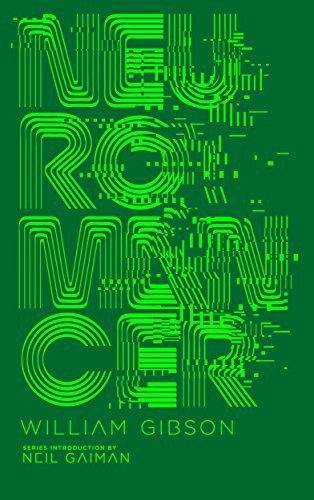
Cover of the Penguin Galaxy edition (Penguin Classics).