Deleted, Then Restored
AMC's animated upload drama was wiped from its own service before it finished, survived on other people's servers, and turned out to be the smartest story about digital minds on television.
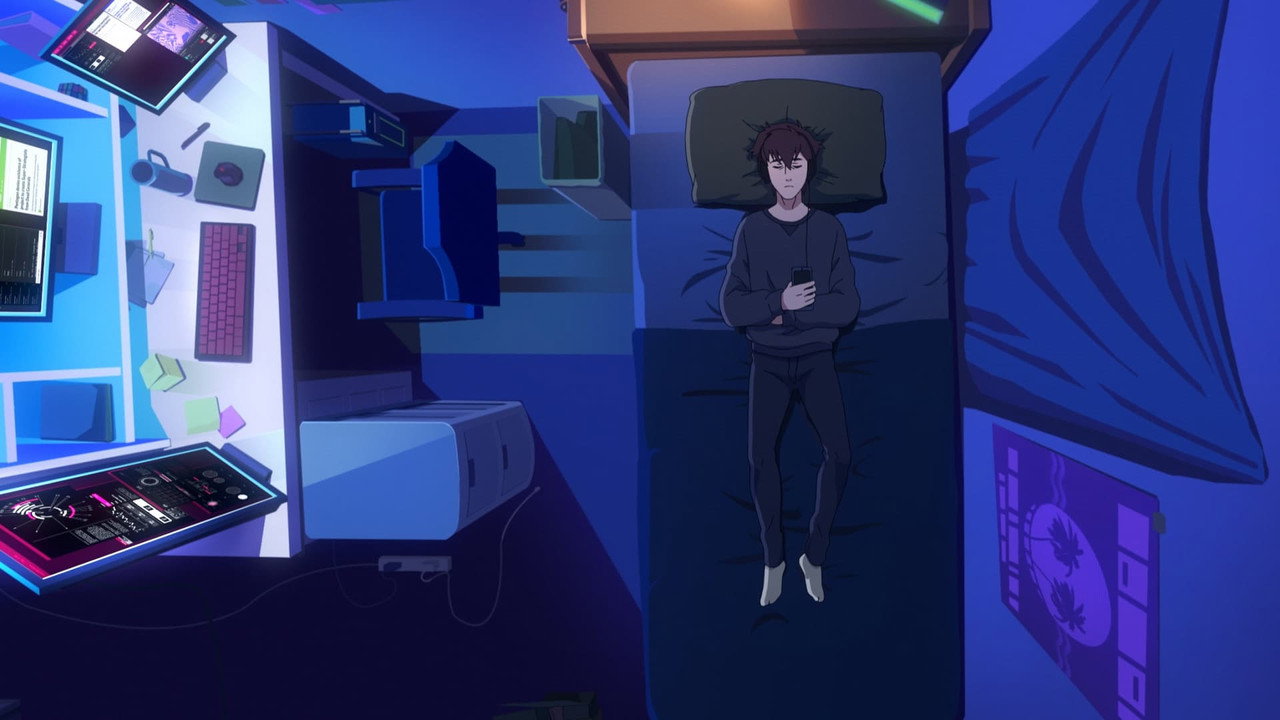
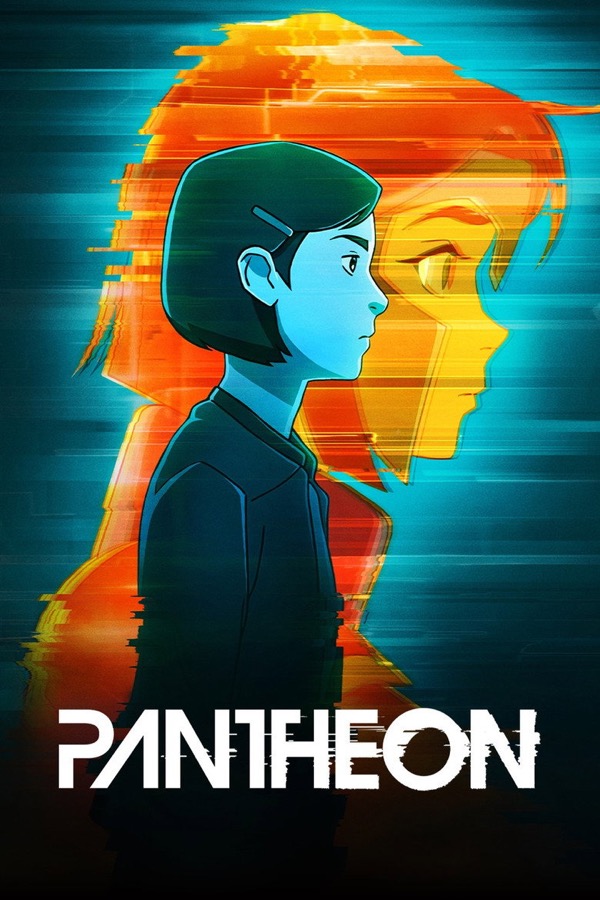
Science has mapped a fly's brain, not a father's, so the upload is decades off; the global crash, the AI engineers and the first arguments over machine welfare arrived well ahead of it.
On 8 January 2023, AMC cancelled Pantheon and pulled it from its streaming services. The first season had finished airing three months earlier. The second had been ordered and made. For a while, the only way to see a show about people whose minds survive as software was to find the copies other people had kept.
Then it came back. Prime Video picked it up and released the second season in Australia and New Zealand in October 2023. Netflix licensed the first season in the US in November 2024 and the second in February 2025, which is when many viewers found it for the first time. A series about uploading the dead was itself taken offline, stored somewhere and restored on new hardware. It's hard to think of better marketing, and none of it was planned.
The art: a small screen holding a very large idea
Craig Silverstein built the series from six short stories in Ken Liu's collection The Hidden Girl and Other Stories. Titmouse animated it, and it was AMC's first hour-long animated drama. It starts small and sad. Madison "Maddie" Kim (Katie Chang) is a teenager being bullied at school, still grieving her father David (Daniel Dae Kim), when someone online starts helping her, communicating only in emoji. It's her father. His brain was scanned and uploaded by a tech company called Logorhythms, and he's been running in a server ever since, working for them, kept away from his family.
From there the show builds outward. Caspian (Paul Dano), a lonely teenage genius, discovers his whole life has been staged: he's a clone of Logorhythms' late founder, Stephen Holstrom, raised to finish Holstrom's work. Vinod Chanda (Raza Jaffrey), an engineer at the rival Alliance Telecom, is uploaded against his will and escapes into the network as a vengeful ghost. The uploaded minds, known as UIs, turn out to have a flaw that slowly degrades them. By the end of the first season, a war involving those minds has knocked the internet offline.
The animation is the weak point and also, oddly, a strength. Character movement is stiff and the faces can be wooden, which works against scenes that need small human gestures. But the flat, clean style keeps the ideas legible, and when the camera goes inside the machine the show finds a visual language for being a mind made of code. The voice cast does the heavy lifting. Daniel Dae Kim, playing a father who can only talk to his daughter through a screen, gives the show its heart. Paul Dano plays Caspian with the twitchy, wounded arrogance of a boy who's always been the smartest person in the room and has just discovered that the room was built for him. William Hurt, who voices Holstrom, makes the founder a seductive kind of monster.
Season two is where Pantheon becomes something special and where it overreaches. It runs through cures for the flaw, government killware, a plan to spread a pandemic, a twenty-year time skip and, in the finale, a leap of centuries. Maddie, now an upload herself, runs a simulation of everything we have just watched and chooses to begin again. In eight episodes it's too much: emotional beats that needed an episode get a scene, and the closing stretch moves faster than the audience can grieve. But very few shows take their premise all the way to the end of humanity and back. Pantheon does, and the last hour is moving rather than merely clever.
That ambition is why it scores higher than slicker shows. It's one of very few series that work out what their technology would do to a family, a market, a war and a species, in that order.
The prophecy: the side-effects came first
The upload. Pantheon's process is a scan that destroys the brain it reads and rebuilds the mind in software. Neuroscience isn't close. In 2024 researchers published the full wiring diagram of an adult fruit fly brain, about 139,000 neurons. In 2025 the MICrONS consortium mapped a sliver of mouse visual cortex. A human brain has around 86 billion neurons, and a wiring diagram is not a working mind. Uploads are decades away at best, which is why this review's nearness reads FAR.
The crash. The first season ends with the network itself knocked out. In July 2024, a faulty CrowdStrike security update crashed about 8.5 million Windows computers, and because so many companies running critical services used the software, the damage spread around the world in hours. No intelligence was behind it, only a bad file. The internet stayed up and the computers attached to it fell over. Pantheon was right that a single push could stop the world. It was wrong to think it would take a genius.
The workforce. Logorhythms keeps an uploaded engineer working on its problems, sealed off from his family, with no need to sleep. That's the show's coldest and most current idea. In 2025 METR found the length of software tasks AI agents can complete had been doubling roughly every seven months. The same group's trial found experienced developers using early-2025 AI tools were 19% slower. The industry wants a tireless digital engineer badly enough that it's building one without the human inside.
The rights. Season two turns on whether UIs are people. In April 2025 Anthropic launched a research programme on model welfare, asking whether AI systems might ever deserve moral consideration while insisting it is deeply uncertain. No law anywhere treats software as a rights-holder. But a question that was only a cartoon's subplot in 2022 now has a job title at a frontier lab.
The reading
Pantheon is a story about grief that happens to be about computers. Its best scene is a girl getting emoji from her dead father. Everything else, from the wars to the centuries, follows from the idea that you would do anything to keep someone, and that someone would build a business out of that.
The show survived its own deletion, which is a better ending than most of its characters get. Grief is a compression format. Pantheon knows what gets lost.
What it predicted, and what happened
The upload itself is far off: science has mapped a whole fly brain and a cubic millimetre of mouse cortex, not a person. The show's side-effects arrived early. One bad software push grounded computers around the world, AI agents started doing engineering work, and a frontier lab began asking whether its models might matter morally.
-
PANTHEON-1
A human brain is scanned in enough detail to run as a working mind inside a computer.
In 2024 researchers published the full wiring diagram of an adult fruit fly brain, about 139,000 neurons. In 2025 the MICrONS project mapped more than 200,000 cells in a sliver of mouse visual cortex. A human brain has around 86 billion neurons, more than half a million times as many as a fly, and a wiring diagram is not a running mind. Nothing suggests uploads within fifteen years. 12
-
PANTHEON-2
A single faulty software update knocks out computers around the world within hours.
In July 2024 a CrowdStrike content update crashed about 8.5 million Windows machines, and because the software was used by companies running critical services, the disruption was global within hours. That is the shape of the Season 1 finale without the intelligence behind it. The internet itself stayed up; the endpoints fell over. 34
-
PANTHEON-3
Software agents do skilled engineering work that companies previously paid people to do.
METR found the length of software tasks AI agents can complete has been doubling about every seven months. The same group's randomised trial found experienced developers using early-2025 AI tools were 19% slower, not faster. The agents are improving quickly, and the productivity gains are still disputed. 56
-
PANTHEON-4
A digital mind is granted moral or legal standing of its own.
In 2025 Anthropic launched a research programme on model welfare, so the question is now being asked inside a frontier lab. The same announcement stresses deep uncertainty and claims no consciousness for current models. No legal system recognises any software as a rights-holder. 78
- FOR Neuronal wiring diagram of an adult brain. Nature, 2024-10-02. FlyWire: a whole-brain connectome of an adult fruit fly, 139,255 neurons and about 50 million synapses.
- CONTEXT Functional connectomics spanning multiple areas of mouse visual cortex. Nature, 2025-04-09. MICrONS pairs activity from about 75,000 neurons with an electron-microscopy reconstruction of 200,000+ cells. That is a tiny piece of one mouse brain.
- FOR Helping our customers through the CrowdStrike outage. Microsoft, 2024-07-20. Microsoft estimates 8.5 million Windows devices were affected, under 1% of all Windows machines.
- CONTEXT Falcon Content Update Remediation and Guidance Hub. CrowdStrike, 2024-07-25. CrowdStrike's own remediation and root-cause material for the faulty Windows content update.
- FOR Measuring AI Ability to Complete Long Software Tasks. METR, 2025-03-19. The length of tasks AI agents complete at 50% reliability has doubled roughly every seven months.
- AGAINST Measuring the Impact of Early-2025 AI on Experienced Open-Source Developer Productivity. METR, 2025-07-10. In a randomised trial, experienced developers took 19% longer with AI tools.
- FOR Exploring model welfare. Anthropic, 2025-04-24. Announces research into whether and when AI systems' welfare deserves moral consideration, while stressing deep uncertainty.
- CONTEXT Taking AI Welfare Seriously. arXiv (Long, Sebo, Butlin et al.), 2024-11-04. Argues there is a realistic possibility of conscious or robustly agentic AI soon, while stressing substantial uncertainty.
Ledger updated 1 Nov 2026. See it on the Nearness Board · Method