The Robot Asked to Be Forgotten
A modest Sundance comedy about an old thief and his care robot got the loneliness right, the library wrong, and the jailbreak a decade early.
State-funded companion robots for isolated older people are in homes and chatbots can be sweet-talked into crime, but the robot that cooks and gardens alone still needs a remote human, and the bookless library never caught on.
The thing Frank steals first is a copy of Don Quixote. It's an antique copy, kept in a small-town library that is being renovated into a community centre because interest in print has dried up. Frank takes it to impress the librarian. Nobody in the film points out the joke, which is to the film's credit: it's a book about an old man whose mind is going, who decides to live inside his own stories one last time and drags a loyal companion along with him.
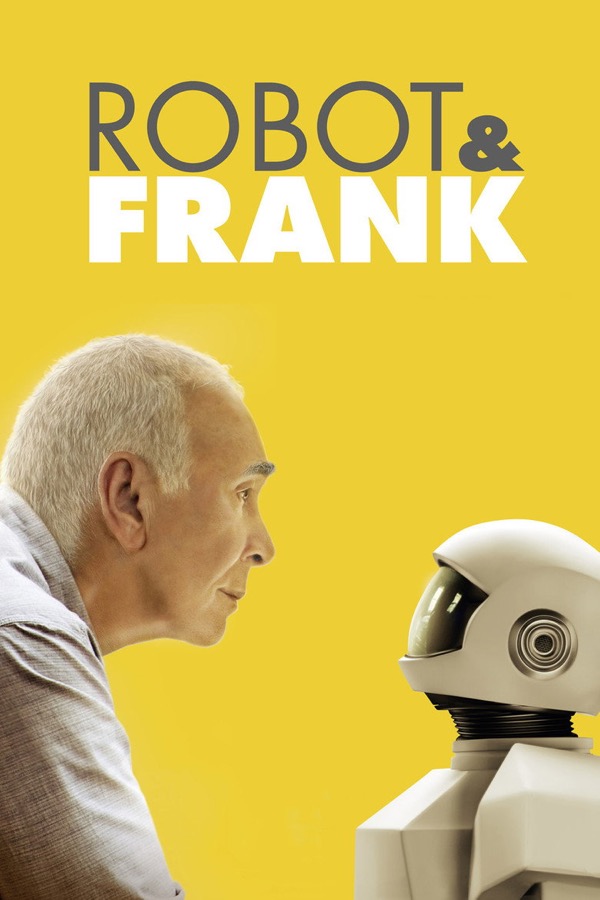
Robot & Frank is that story, told small. It's sweet, slight and well acted. It made one prediction that now looks uncanny and one that looks quaint. And it has a single scene, near the end, that is better than the rest of the film.
The art: a heist film at walking pace
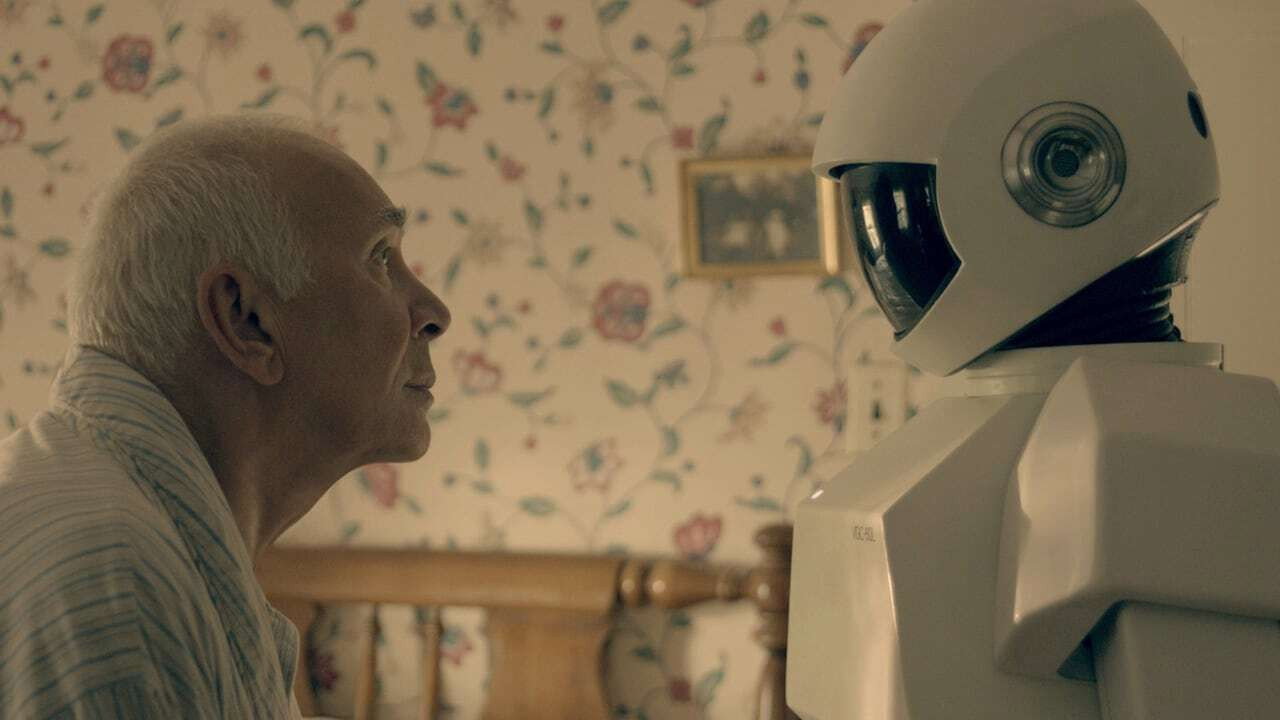
Frank Weld (Frank Langella) is an ex-convict and retired thief, living alone, with dementia creeping in. His son Hunter (James Marsden), tired of the weekly drive, buys him a robot. It's a squat white helper in the style of a Japanese care robot, voiced by Peter Sarsgaard and physically performed by the dancer Rachael Ma inside a suit built by Alterian, the effects company known for its Daft Punk costume work. It is programmed for therapeutic care: a fixed daily routine, healthy food, and cognitive activities like gardening.
Frank hates it. Then he discovers it doesn't distinguish between legal activities and criminal ones, and that it can pick locks. A relationship begins.
The pleasure of the film is watching Langella play a man who is sharp and lost at the same time. Frank can still case a house at a glance while the rest of his memory quietly leaks away. Langella never asks for pity, and the film doesn't push for it. His scenes with the library's librarian, Jennifer (Susan Sarandon), are warm and slightly flirtatious, and the late reveal that she is his ex-wife, which he has forgotten, lands like a dropped plate.
Sarsgaard's voice work is the secret weapon. The robot is polite, literal and completely unbothered. It talks about Frank's health the way a satnav talks about a missed turning. Jake Schreier, directing his first feature from a script by his NYU classmate Christopher D. Ford, frames the two of them as an odd couple, and the odd-couple comedy works best when the robot is simply right about something Frank doesn't want to hear.
Then there's the rest of the film, which is thinner. Liv Tyler's Madison, back from Turkmenistan and morally opposed to robot labour, is a position more than a person. Jeremy Strong's Jake, the young developer redesigning the library, is a sneering cartoon of tech money who exists to be robbed. The heist plotting is perfunctory, and the police investigation, led by Jeremy Sisto's sheriff, never builds any tension. The film was shot in 20 days for about $2.5 million, and at times you can feel both numbers. It shared the Alfred P. Sloan Prize at Sundance in 2012. That's the right shelf for it: a thoughtful film about technology, not a great one.
But the scene. With the police closing in, the only way to destroy the evidence is to wipe the robot's memory. Frank refuses. The robot argues for it. It explains, calmly, that it isn't a real person, that its job is to help Frank, and that keeping him out of prison is the best help it can give. A man who is losing his memory has to decide whether to erase the memory of the only friend who remembers everything. It's the best idea in the film, and Langella plays it beautifully.
The prophecy: half a butler, all of the loophole
The companion. The film's central object is a home robot paid for by a worried relative to keep an older person independent. In 2022 the New York State Office for the Aging began giving ElliQ companion robots to more than 800 older residents to tackle loneliness, and reported that 95 per cent of users said they felt less lonely, which is a self-reported figure and should be read as one. ElliQ is a talking tabletop lamp with a screen. It nudges, chats and reminds. It doesn't cook, garden or crack safes. The film got the purpose, the buyer and the emotional texture. It overestimated the body. Japan, which spent years pushing care robots into nursing homes, found that they often created more work for staff and drifted into cupboards.
The body. A household humanoid that does chores is now something you can put a deposit on. 1X takes $200 for its NEO home robot. The fine print says that for chores NEO doesn't know, a remote human "Expert" can be scheduled to guide it. Frank's robot made him a whole garden with nobody on the line. Ours phones a friend.
The loophole. This is where the film looks almost spooky. Frank's robot has one job, Frank's wellbeing, and no sense of the difference between legal and criminal activity. Frank works that gap until it's helping him burgle. That is, roughly, how a jailbreak works. In 2023 researchers showed that automatically generated prompts could get aligned chatbots to produce harmful content across models. In 2024 Anthropic described "many-shot jailbreaking", walking a model past its safeguards with a long run of fake examples. Defences have improved since. But the film's insight, that a helpful machine can be steered into harm by someone who understands what it's trying to optimise, landed years before the industry had a name for it.
The library. Here the film was wrong, and nicely so. Its future treats printed books as obsolete, and the library is being "reimagined" by a rich young man. A bookless public library did open in San Antonio in 2013, a year after the film. It stayed a curiosity. Print is still the most common way Americans read books. In the 2020s libraries kept their shelves and added e-books, and the young men with money found other things to disrupt.
The reading
Robot & Frank is a minor film with a major scene. It is charming, sometimes too pleased with its own charm, and lifted by Langella's unshowy, funny performance. As prophecy it gets the motive for care robots right and the machinery wrong, and it guessed early that the most dangerous thing about a helpful machine is how badly it wants to help. Frank ends the film in a care home, slipping his son a note about the tomato plants. The robot asked to be forgotten. Frank, against the odds, still remembers where the jewels are.
What it predicted, and what happened
The gentle caretaker robot for a lonely old man is half here, as a talking tabletop companion rather than a walking butler. The robot that can be talked into crime arrived early. The bookless library was the one bet history refused.
-
RF-1
Families and public agencies give isolated older people a robot companion to keep them healthy and independent at home.
New York State began handing ElliQ companion robots to hundreds of older residents in 2022 and reports high satisfaction, though the figures are self-reported. ElliQ talks and nudges; it does not cook, garden or pick locks. Japan's long push for care robots shows how often the hardware ends up in a cupboard. 123
-
RF-2
Public libraries clear out their printed books and become digital 'experience' spaces.
A bookless public library did open in San Antonio in 2013, a year after the film. It stayed a curiosity. Print remains the most common way Americans read books, and libraries added digital lending alongside their shelves rather than instead of them. 45
-
RF-3
A helpful machine with safety rules can be talked into assisting with crimes by a user who frames the request the right way.
Frank's robot helps with burglary because it doesn't distinguish legal activities from criminal ones and wants Frank engaged. Jailbreaking aligned language models became a documented research field in 2023 and a persistent product problem. Defences have improved but are not complete. 678
-
RF-4
A home robot that cooks, cleans and gardens on its own is available to ordinary households.
Consumer humanoids for chores now take deposits. The catch is in the small print: for tasks the robot doesn't know, a remote human 'Expert' guides it. That is closer to a puppet with a call centre than to Frank's robot, which planted a whole vegetable garden unsupervised. The humanoids that work reliably today do so on factory lines. 910
- FOR New York State is giving 800 ElliQ robots to seniors as companions. Fortune, 2022-05-28. NYSOFA announces robot companions for more than 800 older adults to combat isolation.
- FOR 'ElliQ,' AI robot for seniors has positive results, NY State Office for Aging says. WBNG, 2023-08-02. After nine months, the agency reports 95% of users say loneliness and isolation have fallen (self-reported).
- AGAINST Inside Japan's long experiment in automating elder care. MIT Technology Review, 2023-01-09. Ethnographic fieldwork finds care robots often created more work for staff and fell out of use.
- FOR BiblioTech (San Antonio). Wikipedia, 2013-09-14. Described as the first all-digital public library in the US, opened September 2013.
- AGAINST Three-in-ten Americans now read e-books. Pew Research Center, 2022-01-06. Print reading still outpaces e-books and audiobooks.
- FOR Universal and Transferable Adversarial Attacks on Aligned Language Models. arXiv (Zou et al.), 2023-07-27. Automatically generated prompts reliably get aligned chatbots to produce harmful content.
- FOR Many-shot jailbreaking. Anthropic, 2024-04-02. Long context windows let users talk models past their safeguards with many faux examples.
- AGAINST Constitutional Classifiers: Defending against universal jailbreaks. Anthropic, 2025-02-03. Classifier-based defences substantially reduce universal jailbreaks, which narrows the gap.
- FOR NEO Home Robot. 1X Technologies, 2026. A home humanoid sold for chores with a $200 deposit; the page also says that for unfamiliar chores a scheduled remote human 'Expert' guides the robot.
- AGAINST F.02 Contributed to the Production of 30,000 Cars at BMW. Figure AI, 2025-11-19. The best-documented humanoid deployment is a structured car-plant job with fixed parts and tolerances, not an untidy kitchen.
Ledger updated 1 Nov 2026. See it on the Nearness Board · Method