No Escape Key
Apple's office horror is the most beautiful thing ever made about a cubicle, and its sharpest prophecy has nothing to do with the chip in Mark's head.
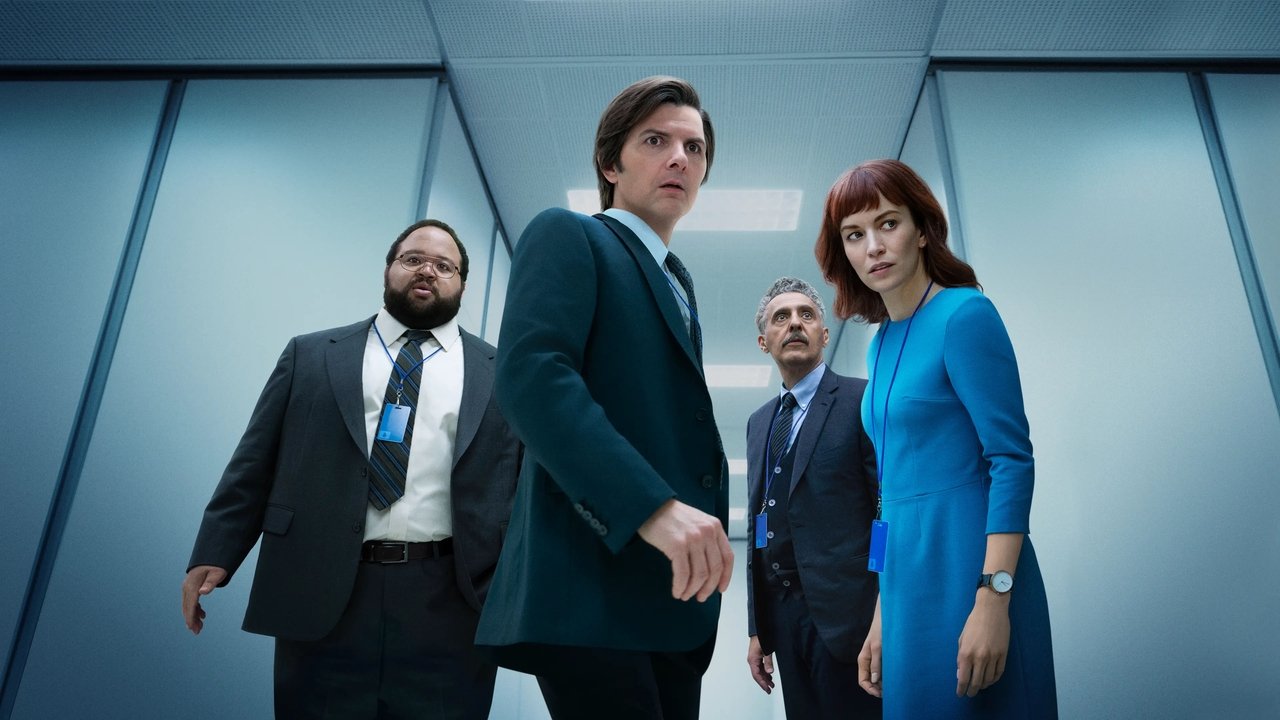
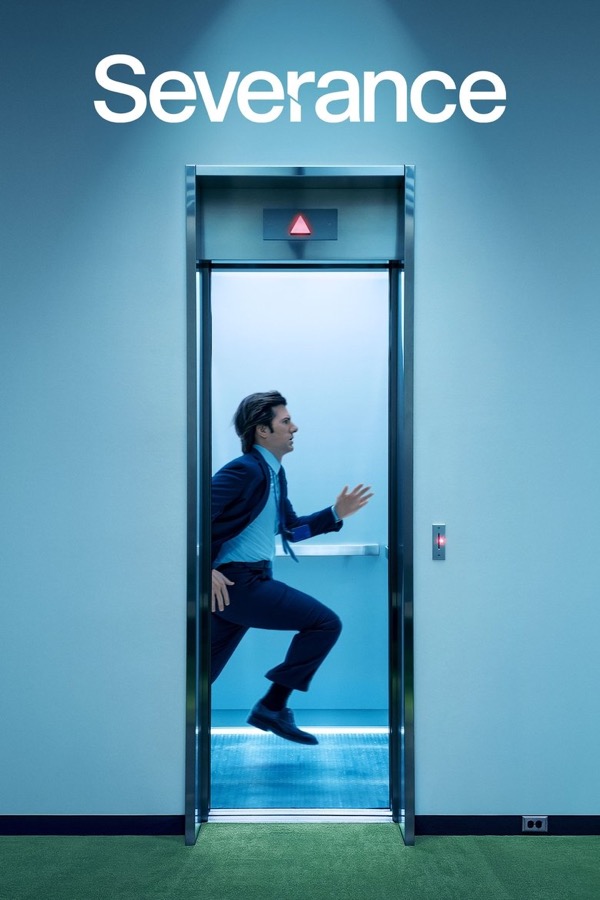
The memory-splitting chip is still science fiction, but the software that scores every idle minute is standard kit, and the first laws about workplace chips and brain data are already on the books.
The computers in Lumon's Macrodata Refinement department were built for the show. They're modelled on Data General Dasher terminals from the 1970s, with working trackballs so the cast could actually do the job on camera. And something is missing from the keyboards. There is no Escape key.
That's Severance in one prop: funny, cruel and so carefully designed that you can miss how angry it is. Mark S. (Adam Scott) works on the severed floor of Lumon Industries, a biotech giant run like a church. Like his colleagues, he has had a chip put in his brain that splits his memory in two. The "innie" knows only the office. The "outie" goes home every evening with no idea what he did all day. The innies sort numbers that frighten them into digital bins, and nobody will tell them why.
Dan Erickson came up with the idea while working a dull office job at a door factory, wishing he could skip the eight hours. Ben Stiller, who directs most of it, read the pilot years before it was made. Season one landed in February 2022. Season two arrived in January 2025, after the 2023 strikes stalled the shoot, and season three began filming this July. So this is a review of a show in mid-sentence. It's been worth the wait so far, though not every minute of it.
The art: a beige cathedral
Start with how it looks, because nothing else on television looks like this. The production designer, Jeremy Hindle, mixed corporate styles from the 1960s to the 1980s and borrowed from Eero Saarinen. Lumon's exterior is Saarinen's Bell Labs Holmdel Complex in New Jersey, a building made for people who were paid to think. The Macrodata Refinement room is a stage 80 feet by 40 with a deliberately low ceiling and a green carpet meant to read as grass. Four desks sit in the middle of all that empty space, like a playpen.
Jessica Lee Gagné, the main cinematographer, lights it with cold overhead fluorescents and keeps framing people through doorways and over partitions, so everyone looks boxed in even when the room is huge. The corridors go on for ever because they're built that way: about 140 feet of hallway, rearranged between set-ups into a maze. The feeling of being lost in a building is built, not faked.
The cast is just as precise. Tramell Tillman's Milchick, the deputy manager, smiles like a man reading from a script he half believes, and he won an Emmy for it. So did Britt Lower, who plays Helly R., the new hire who keeps trying to escape and learns that her outie won't let her resign. John Turturro and Christopher Walken play a late-life love story between two men who can't know what their outies are doing. It's the gentlest thing in the show and quietly the saddest. Patricia Arquette's Harmony Cobel, a manager who lives next door to Mark under a false name, is a grotesque that the show slowly turns into a person.
It's also very funny. The "Music Dance Experience" in "Defiant Jazz" and the waffle party in "What's for Dinner?" are corporate perks staged as pagan rites, and they're the best satire of workplace wellness anyone has made. Lumon doesn't pay its innies more. It throws them a party.
Season two is grander and looser. "Woe's Hollow" takes the team on an outdoor team-building retreat on a frozen lake and is the best single hour the show has made. "Chikhai Bardo," which Gagné directed, tells the story of Mark's marriage to Gemma in flashback while Gemma is put through Lumon's experiments on the testing floor, and it's devastating. The finale, "Cold Harbor," has a marching band in it, and it earns the band. In between, though, the mystery-box machinery starts to creak. The season withholds for the sake of withholding, and the goats, the Board and the true purpose of the numbers are still mostly vibes. A show about pointless work shouldn't make its audience do quite so much of it. That's why this is an 8.4 and not a 9.
The prophecy: the contract signs itself
The chip is the least prophetic thing in Severance, and the show knows it. Nobody is close to dividing a working memory from a home memory. The nearest real research goes the other way. In 2018 a team reported that implanted electrodes stimulating the hippocampus improved memory recall in a small group of human volunteers by about 35 per cent. That's a step toward repairing memory, not partitioning it. The procedure on the severed floor is still decades away, if it ever comes.
What the show gets right is everything around the chip.
The percentage bar. Each MDR file comes with a progress counter, and Lumon knows the numbers better than the workers do. That arrived years ago. In September 2025 a survey by the Chartered Management Institute found that about a third of UK employers were using "bossware" to watch staff activity, and one in seven were recording or reviewing screens. Vendors sell reports on "idle time" and keystrokes. In the early 2020s, millions of people who worked from home discovered that the office had followed them in through the laptop. Lumon only had to build the corridor.
The implant. In the show, the chip is a political fight, with a Lumon-backed senator pushing to legalise it. That happened too, on a smaller scale. A Wisconsin company offered microchip implants to its staff in 2017, and Swedish office workers have used them to open doors. Lawmakers moved faster than the market did. Wisconsin banned forced implants in 2006, and in 2026 Washington state barred employers from even asking, joining at least a dozen states with similar laws. The law has nothing against the chip. It objects to the boss asking for one.
The brain at work. In 2024 Colorado added neural data to the sensitive data protected under its privacy law. That's a small change, but it marks the moment brain readings stopped being a lab curiosity and became something you could sell. You can already buy EEG earbuds that promise to track your focus and stress "anywhere you work". No employer is reading your mind yet. But someone has already been made to promise not to.
The show's real prophecy is about consent. In the first season, Helly asks to resign and her outie refuses in a recorded message, dismissing the very idea that her innie is a person. One self signs a contract and the other self has to live under it. That's the near-future problem. Think of the terms and conditions you accepted years ago that now govern a version of you that didn't exist then: the data you consented to share, the work account that knows more about your days than you do. Erickson's fantasy of skipping eight hours of work turned into a show about who pays when you do. The answer is the person who stays behind at the desk.
The reading
Severance is a masterpiece of design and a very good drama, with a mystery that sometimes gets in the way of both. It stops short of 9 because its plot keeps promising answers it hasn't yet given. As prophecy, it looks wrong about the brain chip and very right about the workplace. The tracking software, the voluntary implant and the legal fight over brain data have all turned up, and nobody needed to open a skull. Lumon's genius was in noticing what workers would agree to if the perks were good enough, more than in anything it did with neuroscience. On the severed floor, as in a lot of real offices, there are melon bars and waffle parties. There is no Escape key.
What it predicted, and what happened
Severance's central device, a chip that splits memory between work and home, remains far off. Almost everything around it has arrived: minute-by-minute productivity scoring, voluntary workplace implants and the first laws treating brain data as sensitive.
-
SEV-1
Employers score office workers' output minute by minute, tracking screens, keystrokes and idle time.
Monitoring software that logs activity, takes screenshots and reports idle time was widely sold by the time pandemic remote work took hold in 2020. A 2025 survey of UK managers found about a third of employers using it. The open questions are about regulation and trust, not whether the technology exists. 12
-
SEV-2
Companies implant microchips in employees to control access to the workplace.
Voluntary implant schemes have run at employers in Sweden and the US, including a Wisconsin company that offered chips to staff in 2017. Uptake stayed niche. The stronger trend is legislative: at least a dozen US states now bar employers from requiring implants, and Washington bars them from even asking. 34
-
SEV-3
Workers' brain activity is measured with neurotechnology and the data is collected at work.
Consumer EEG wearables that claim to track focus and stress during work are on sale, and some enterprise neurotech vendors market workplace well-being services. Lawmakers are moving early: Colorado classed neural data as sensitive data in 2024 and UNESCO has adopted a global ethics standard. Routine employer use is not yet documented at scale. 567
-
SEV-4
A brain implant can divide a person's memories into separate work and non-work selves.
Memory implants exist only as research aimed at restoring memory after injury. Stimulation has improved recall in small human trials, but nobody has shown selective, switchable partitioning of episodic memory. The breakthroughs required are not on any visible roadmap. 89
- FOR Inside the Invasive, Secretive "Bossware" Tracking Workers. Electronic Frontier Foundation, 2020-06-30. Surveys the monitoring products sold to employers as remote work spread in 2020.
- FOR A third of UK firms using 'bossware' to monitor workers' activity, survey reveals. The Guardian, 2025-09-14. CMI survey: about a third of UK employers monitor online activity and one in seven record or review screens; also reports managers' unease about trust.
- FOR Businesses can't require microchip implants for workers under new WA law. Washington State Standard (via Wenatchee World), 2026-03-16. Records a Wisconsin employer's 2017 implant offer and Swedish workers using chips for building access, as background to Washington's ban.
- AGAINST Wisconsin law bars forced RFID implants. Network World, 2006-06-12. One of the first state laws banning forced implantation, passed before any employer had tried it.
- FOR MN8 – 2 Channel EEG Headphones. Emotiv, 2026-11-01. EEG earbuds marketed for tracking focus and stress, usable 'anywhere you work'. Date is when accessed.
- AGAINST HB24-1058 Protect Privacy of Biological Data. Colorado General Assembly, 2024-04-17. Signed 17 April 2024; adds neural data to the sensitive data protected by the Colorado Privacy Act.
- CONTEXT Ethics of neurotechnology. UNESCO, 2026-11-01. UNESCO's hub for its global neurotechnology ethics standard; notes commercial uses of neural data. Date is when accessed.
- CONTEXT Developing a hippocampal neural prosthetic to facilitate human memory encoding and recall. Journal of Neural Engineering, 2018-06-01. Patterned hippocampal stimulation improved short- and long-term recall by about 35 per cent in human subjects: repair, not partition.
- CONTEXT Restoring Active Memory (RAM). DARPA, 2026-11-01. Completed programme aiming at an implantable interface to restore memory after brain injury. Date is when accessed.
Ledger updated 1 Nov 2026. See it on the Nearness Board · Method