The Pizza Arrived. The Government Didn't.
Silicon Valley read Neal Stephenson's 1992 satire as a product roadmap, built the wrong part of it, and walked straight into the parts it was laughing at.
The Metaverse was built, renamed one of the world's biggest companies and half-emptied again, while the franchise enclaves, private money and weaponised images Stephenson played for laughs turned up on schedule.
On 28 October 2021, Facebook changed its name to Meta. It took the name from a novel in which the main character is called Hiro Protagonist, delivers pizza for the Mafia and owns a sword.
That is the strangest fact about Snow Crash, and it isn't really about the book. Neal Stephenson's 1992 novel coined "metaverse" and popularised "avatar" for a body in a virtual world, and for thirty years engineers have treated it as a spec sheet. They mostly skipped the jokes. The jokes were the point. Read today, Snow Crash is less a forecast of virtual reality than a very funny account of what happens to a country that sells itself off a franchise at a time, and that part has aged unnervingly well.
The art: a cartoon with a reading list
The setup is a gag that keeps paying out. The federal government has handed most of its power to private outfits, and Los Angeles has broken up into gated suburbs and franchise-run micro-nations. One of those is Mr. Lee's Greater Hong Kong, which has its own currency, Kongbucks. Hyperinflation has made big banknotes nearly worthless. The CIA has merged with the Library of Congress into a for-profit Central Intelligence Corporation, which pays freelance "stringers" whenever someone uses what they upload. Hiro is a hacker who drives for CosaNostra Pizza, where a late delivery is a matter for Uncle Enzo. When Hiro crashes during a run, a teenage skateboard courier called Y.T. finishes the delivery for him. They go into business selling intelligence.
The Metaverse is the other half. It's a single black planet with one boulevard, the Street, running 65,536 kilometres around it. Status is resolution. Cheap avatars are grainy. Hiro has friends in the exclusive Black Sun club. Then a datafile called Snow Crash turns up. It crashes hackers' computers and their brains together, and Hiro's friend Da5id gets hit. The trail runs back through Sumerian myth, the Tower of Babel and a linguistic virus, to L. Bob Rife, a telecoms monopolist whose fibre network covers the world. Rife's floating city, the Raft, is built around an old aircraft carrier.
For about two hundred pages the novel is a sugar rush. Stephenson's sentences are fast and pleased with themselves in the best way, and the action set pieces read like a comic book: skateboard couriers harpooning passing cars, Raven riding a motorcycle that carries a nuclear warhead rigged to go off if he dies. Stephenson first planned this as a computer-generated graphic novel with the artist Tony Sheeder, and you can feel it in the panel-by-panel momentum.
Then the Librarian arrives. Hiro's reference software is a patient daemon, and through it Stephenson delivers long lectures on Sumerian religion, Enki and the nam-shub that can reprogram the brain. The ideas are fun. The delivery stops the novel dead, and the climax on the Raft is a muddle of armies and exposition. Worse, the book's handling of Y.T., who is fifteen, in her sexual encounter with Raven reads as a misjudgement the novel never looks at. A good editor would have saved a hundred pages and that scene. It's a great premise with a thinning second half. Hence 7.6.
The prophecy: the satire beat the spec
The Metaverse. This is the famous one, and it's the miss. A persistent 3D world full of avatars has existed since at least Second Life in 2003. Meta bet its name on making it the successor to the internet. By January 2026 Meta was cutting more than a thousand VR jobs and closing studios, after Reality Labs posted a $6.02 billion operating loss in the last quarter of 2025 alone. In March it said Horizon Worlds would leave VR headsets for phones, then reversed the decision a day later after users complained. The Metaverse was built. People visit. Nobody lives there. The novel's Street was a status machine, and the status went to Instagram instead.
The franchise state. This is the hit. In Honduras, Próspera was set up on the island of Roatán as a private charter zone with its own rulebook. When a new government repealed the law behind such zones in 2022, the company took Honduras to investment arbitration under a trade treaty, and in October 2026 the case was still going. A burbclave suing a sovereign nation is a Stephenson subplot. The privatised CIA hasn't happened, but the stringer economy has: an internet where millions of people feed someone else's database and get paid by the click, if they're paid at all.
Kongbucks. Private money that circulates alongside the national kind. In July 2025 the United States signed the GENIUS Act, setting federal rules for dollar stablecoins issued by private companies. Central bankers at the BIS argued they fail the basic tests of money. Stephenson would have enjoyed both documents.
The virus. Snow Crash is an image that damages the brain of the hacker who looks at it. In 2008 attackers posted flashing animations on the Epilepsy Foundation's forum to trigger seizures. In 2016 a strobing GIF sent on Twitter gave the journalist Kurt Eichenwald a seizure, and a Texas grand jury called it a deadly weapon. The Sumerian machinery was nonsense. The basic fear, that what you see on a screen can be used as a weapon against you, was not.
The reading
Snow Crash gets read as a prophecy of virtual worlds because that's the part people could build. The better prophecy was the joke underneath: a country so devoted to the private sector that it outsources its own government, while the only institution still running on time is a Mafia pizza chain.
Stephenson didn't predict Meta. He predicted the kind of company that would read a satire of corporate power and see a business plan. The pizza arrived. The government didn't. Three decades on, we're still waiting for that delivery.
What it predicted, and what happened
The novel's most famous idea, the Metaverse, arrived early and then emptied out. Its satirical ones are holding up better: private enclaves suing governments, private money written into law, and images sent down a wire to hurt the person who sees them.
-
SNOWCRASH-1
People spend leisure, money and working time inside a persistent shared 3D virtual world, as avatars.
Second Life opened in 2003 and game worlds have since hosted economies, concerts and offices. Facebook renamed itself Meta in 2021 to chase the idea. The Street as a successor to the internet never came: by 2026 Meta was laying off VR staff, closing studios and reshaping Horizon Worlds around phones. The thing exists. It did not become the place where everyone goes. 123
-
SNOWCRASH-2
Privately run enclaves govern themselves outside ordinary national law.
Próspera on Roatán, Honduras, was built as a private charter zone with its own rules. Honduras repealed the law behind such zones in 2022, and the company answered with an investment arbitration claim that was still pending in October 2026. A franchise-state can now sue a real state. Whether it can survive one is still open. 456
-
SNOWCRASH-3
Private companies issue money that people use alongside, or instead of, national currency.
Dollar stablecoins issued by private firms are widely held, and the US wrote them into federal law in July 2025 with full-reserve rules. The novel's Kongbucks are a corporation's own currency. Today's stablecoins are private claims tied to the dollar, and central banks argue they fail the basic tests of money. The private part arrived. The replacement part has not. 78
-
SNOWCRASH-4
Images sent over a network are used as weapons to injure the people who look at them.
In 2008 attackers posted flashing animations on an epilepsy charity's forum to trigger seizures. In 2016 a strobing GIF sent on Twitter gave the journalist Kurt Eichenwald a seizure, and a Texas grand jury called it a deadly weapon. The mechanism is photosensitive epilepsy, not a neurolinguistic virus, so it reaches far fewer people than Stephenson's snow crash. But the basic idea, a picture that hurts the brain that sees it, has been tested in court. 91011
- FOR The Facebook Company Is Now Meta. Meta, 2021-10-28. Mark Zuckerberg renames the company around building the metaverse.
- CONTEXT Second Life. Wikipedia, 2026. History of the Linden Lab virtual world, launched in 2003, with its own avatar economy.
- AGAINST Meta lays off VR employees, underscoring Zuckerberg's pivot to AI. CNBC, 2026-01-14. Reality Labs cuts VR staff and shuts several studios as money moves to AI.
- FOR Próspera | A governance platform where entrepreneurs are Free to Build. Próspera, 2026. The operator markets Próspera as a governance platform with its own regulatory framework.
- CONTEXT Honduras Próspera Inc. and others v. Republic of Honduras (ICSID Case No. ARB/23/2). ICSID, 2023-02-03. Arbitration registered in February 2023 under CAFTA-DR; still pending, with a procedural order issued in October 2026.
- AGAINST Honduran economic zones in 'limbo' after government repeal. Los Angeles Times, 2022-04-30. The new Honduran government repealed the law that allowed self-governing zones, citing sovereignty.
- FOR Fact Sheet: President Donald J. Trump Signs GENIUS Act into Law. The White House, 2025-07-18. Creates a federal framework for payment stablecoins with 100% reserve backing and monthly disclosure.
- AGAINST III. The next-generation monetary and financial system. Bank for International Settlements, 2025-06-29. Argues stablecoins perform poorly on singleness, elasticity and integrity and fall short of being the mainstay of the monetary system.
- FOR Hackers Assault Epilepsy Patients via Computer. WIRED, 2008-03-28. Reports flashing images posted to an epilepsy support forum to provoke seizures.
- FOR Seizure-inducing tweet and GIF deemed "a deadly weapon" by grand jury. CBS News, 2017-03-22. A Maryland man is indicted in Texas after a GIF sent to Kurt Eichenwald induced a seizure.
- CONTEXT US man held for sending flashing tweet to epileptic writer. BBC News, 2017-03-18. Covers the arrest and the federal cyberstalking charge.
Ledger updated 1 Nov 2026. See it on the Nearness Board · Method
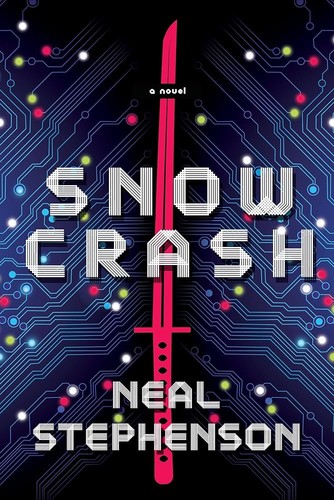
Cover of the Random House Worlds edition (2022).