Scroll Down to Zanzibar
John Brunner's 1968 doorstop is famous for guessing the headcount, the shootings and the man called Obomi, but its sharpest prediction is the way it makes you read.
The seven billion, the routine massacres and the corporate super-brain all turned up roughly on schedule; only the state eugenics board was replaced by a clinic with a price list.
Six hundred and forty square miles. That is the land area of Zanzibar, and it is the sum on which John Brunner hung a novel of nearly 600 pages. Early in the twentieth century, someone worked out that every human being alive could stand shoulder to shoulder on the Isle of Wight. By 2010, Brunner reckoned, there would be about seven billion of us, and the Isle of Wight wouldn't do. You'd need somewhere the size of Zanzibar.
The UN marked the seven-billionth person on 31 October 2011. Brunner, writing in the mid-1960s, was out by about a year. That is the kind of hit that gets a book cited by historians like Niall Ferguson, and Stand on Zanzibar has spent the past fifteen years being passed around as the novel that "predicted everything". Decriminalised cannabis. The collapse of Detroit. A rising China. An African head of state called President Obomi. A Hugo in 1969, and then a long second life as a trivia machine.
The trivia is real. It is also the least interesting thing about the book.
The art: Dos Passos with a satellite dish
Brunner took his method from John Dos Passos's U.S.A. trilogy and turned it up until the dial broke. The novel runs in four interleaved strands, each with its own heading. "Continuity" carries the plot. "Tracking with Closeups" gives 32 short portraits of people the plot never touches. "Context" offers essays and extracts, some from the imaginary books of Chad C. Mulligan, a sociologist who has walked away from his profession and spends the novel being right about everything. And "The Happening World" is pure noise: news items, adverts and fragments of broadcast, jammed together with no one to explain them.
The plot, when you can find it, is a decent pair of thrillers. Norman Niblock House, a black executive at the megacorporation General Technics, is put in charge of a scheme for the company to take over the development of Beninia, a poor, crowded and oddly peaceable West African state led by Zadkiel Obomi. His flatmate, Donald Hogan, is a "synthesist" and, it turns out, a government spy, and he is sent to Yatakang, a Southeast Asian dictatorship whose scientist Sugaiguntung claims to have cracked human genetic engineering. Watching over GT's side of things is Shalmaneser, the company's supercomputer, which is fed the facts about Beninia and rejects them as obviously impossible.
This is where the critics have a point. The Encyclopedia of Science Fiction repeats John Brennan's complaint that the collage can't hide an old-fashioned yarn underneath, and they're right. Hogan's mission in Yatakang turns into a pulp spy caper, complete with a state programme that rewires him into a killer, and it drags against everything around it. The women are worse. In a world of seven billion, Brunner's female characters are mostly mothers, pin-ups or furniture; the invented slang calls them "shiggies", and the critic James Nicoll's summary, that the book fails to notice the women's movement at all, is about as kind as it gets. It is a 1968 novel about sexual freedom that only imagined it for half the cast.
So why the high score? Because the bits that are supposed to be filler are the bits that last.
The prophecy: the feed
Read "The Happening World" in 2026 and something odd happens. It doesn't feel experimental. It feels like your phone.
A headline about a riot. An advert for a lifestyle. A one-line opinion from a stranger. A clip of a celebrity. An outrage. A joke about the outrage. No editor, no hierarchy, no sense of which item matters and which is a toothpaste slogan, and you keep reading because the next fragment might be the one. Brunner built that collage to show a world drowning in information. He ended up drawing the interface we all live inside. The "Tracking with Closeups" chapters do the same job as a timeline of strangers: thirty-two lives, each glimpsed for a few pages and then scrolled past.
Then there are Mr and Mrs Everywhere, the computer-made couple who tour the world on the Engrelay Satelserv channel. Pay the fee and the Everywheres can be made to look and sound like you, so that you watch yourself in the news. The implication is that people believe what they hear themselves say. That isn't a gadget. It's a theory of personalised media, and it took until the age of filters, avatars and algorithmic feeds for it to stop sounding like satire.
The headline predictions mostly hold up too, and the ledger below takes them one by one. The seven billion arrived a year late. The "muckers", people who snap and kill strangers at random, are now a recurring news category in the United States: the FBI counted an average of 6.4 active-shooter incidents a year from 2000 to 2006 and 16.4 a year from 2007 to 2013. Shalmaneser, a private machine more capable than anything a government owns, is close to a description of the mid-2020s, when industry's share of AI supercomputing power went from about 40% to 80% in six years. The novel never once calls Shalmaneser "it".
What he missed tells you as much. The novel's America controls overcrowding with eugenic laws that forbid more and more people to have children. No democracy did that. Instead, genetic sorting arrived as a consumer product, sold to IVF patients by start-ups, with one filmed in 2024 offering to rank embryos by predicted IQ. Brunner imagined the state with a licence. We got the market with a price list. And the overpopulation panic that drives the whole book has softened: global fertility is falling, and the UN now expects the population to peak at around 10.3 billion in the 2080s. Brunner had the number right and the curve wrong.
Detroit, Obomi and the cannabis laws are fun to tick off, but they're the kind of thing you get right by throwing a thousand darts. Throwing a thousand darts was, of course, the method. Brunner's real insight was that a future this crowded couldn't be told through one hero's eyes. It had to come at you as a flood, all at once, unranked, and the reader would have to learn to swim in it.
The reading
Stand on Zanzibar is uneven, overlong, often juvenile about sex and stuck with a spy plot that belongs in a cheaper book. It is also one of the very few science-fiction novels whose form is a prediction. Brunner, who died in 1995, never saw a news feed. He wrote one anyway, in 1968, and called it "The Happening World".
Most prophets tell you what will happen. Brunner showed you what it would feel like to hear about it, every few seconds, for the rest of your life. Seven billion people, one island, and no one in charge of the feed. The crowd was always the main character.
What it predicted, and what happened
Brunner hit the headcount almost to the year, and his lone 'muckers' and corporate super-brain are now ordinary news. His one big structural miss is who does the genetic sorting: not the state with a licence, but the market with a price list.
-
SOZ-1
The world's population reaches about seven billion by 2010.
The UN marked the seven-billionth person on 31 October 2011, a year after Brunner's setting. The number was right; the mood around it was not. Fertility has since fallen to about 2.25 births per woman worldwide and the UN now expects a peak of roughly 10.3 billion in the 2080s, so the endlessly swelling crowd the novel extrapolates from is flattening out. 123
-
SOZ-2
Random mass killings by lone attackers ('muckers') become a routine category of news.
In the US, the FBI counted 160 active-shooter incidents between 2000 and 2013, rising from an average of 6.4 a year in the first seven years to 16.4 in the last seven. Brunner did not invent the phenomenon: the University of Texas tower shooting was in 1966, two years before publication. What he foresaw was its normalisation as a recurring news item. The arrival year marks the step-change in the FBI series and is a judgement call. 45
-
SOZ-3
The most powerful computers belong to a private corporation and sit at the centre of its business and its dealings with governments, as General Technics' Shalmaneser does.
Epoch AI estimates that industry's share of AI supercomputer performance rose from about 40% in 2019 to 80% in 2025, and names xAI's Colossus the most performant AI supercomputer as of March 2025. On the traditional TOP500 benchmark, government laboratories still hold the top three places, so the handover is complete for AI computing but not for scientific supercomputing. 67
-
SOZ-4
The state passes eugenic laws that decide, on genetic grounds, who is allowed to have children.
No democracy licenses parenthood by genome, and the largest state birth-control regime, China's one-child policy, was based on numbers rather than genes and ended in 2015. Genetic selection arrived anyway, by the private route: US firms sell whole-genome and polygenic embryo screening to IVF patients, and one was filmed marketing selection for predicted IQ. Europe's geneticists call polygenic embryo scoring unproven and unethical. The sorting happened, but through a price list rather than a statute. 8910
- FOR State of World Population 2011: People and Possibilities in a World of 7 Billion. UNFPA, 2011. States that seven billion people will inhabit the earth as of 31 October 2011.
- AGAINST Population | United Nations. United Nations, 2024. Projects a peak of about 10.3 billion by the mid-2080s, with global fertility falling towards replacement; the growth curve the novel extrapolates is bending.
- CONTEXT World population projected to reach 9.8 billion in 2050, and 11.2 billion in 2100. UN DESA, 2017. The 2017 projection, since revised downward, shows how recently the never-ending-growth picture was still official.
- FOR A Study of Active Shooter Incidents in the United States Between 2000 and 2013. Federal Bureau of Investigation / Texas State University, 2014-09. 160 incidents; the annual average rose from 6.4 to 16.4 between the study's first and last seven years.
- CONTEXT Mass Shooter Database. The Violence Prevention Project, 2025. Tracks US mass shootings from 1966 onward, a reminder that the novel was extrapolating from events already in the news.
- FOR Trends in AI supercomputers. Epoch AI, 2025-04-23. Industry's share of AI supercomputer compute rose from about 40% (2019) to 80% (2025); the public sector fell below 20%.
- AGAINST TOP500 List, June 2025. TOP500, 2025-06. El Capitan, Frontier and Aurora, all US Department of Energy laboratory machines, hold the top three places.
- AGAINST China to end one-child policy and allow two. BBC News, 2015-10-29. The world's biggest state limit on births is relaxed, and it was never genetic.
- CONTEXT US startup charging couples to 'screen embryos for IQ'. The Guardian, 2024-10-18. Heliospect marketed embryo ranking at up to $50,000 for 100 embryos; selecting for IQ is illegal in the UK but not in the US.
- AGAINST The use of polygenic risk scores in pre-implantation genetic testing: an unproven, unethical practice. European Journal of Human Genetics, 2021-12-17. European geneticists argue against polygenic embryo scoring on scientific and ethical grounds.
Ledger updated 1 Nov 2026. See it on the Nearness Board · Method
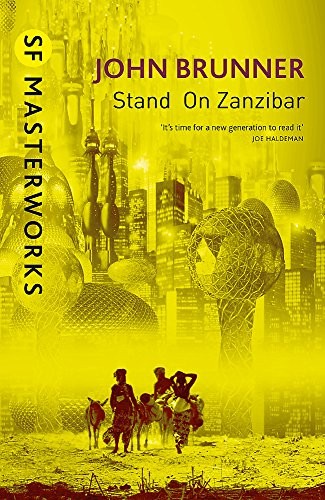
Cover of the Gollancz SF Masterworks edition.