Right About Everything, Except People
Dave Eggers's campus satire predicted the doorbell camera, the genealogy dragnet and the single login, and still reads like a lecture delivered through a megaphone.
The cameras, the genealogy dragnet and the single real-name login have all arrived; the cult of sincere transparency never did, because the platforms preferred to keep their own secrets.
In the autumn of 2013, a former Facebook employee named Kate Losse accused Dave Eggers of borrowing from her memoir of life inside the company, The Boy Kings. Eggers said, through his publisher, that he hadn't read it, and that he didn't want The Circle to seem to be based on any real company or the experiences of anyone who worked at one.
It's a strange thing to insist on, because the novel only works if you think it's about Google and Facebook. And the plain truth of the book, read 13 years later, is that it isn't really about any company at all. It's about an idea of a company, built by someone who looked at Silicon Valley from the outside and found it ridiculous, frightening and slightly beneath him. Those are fair things to feel. They don't make a novel.
The book: a campus, a convert, a sermon
Mae Holland has done 18 months in a cubicle at the utility company in her home town when her college roommate Annie gets her hired at the Circle, the most powerful internet company in the world. The Circle has swallowed the social networks and the search engines. Its founder, the reclusive Ty Gospodinov, invented TruYou, a single real-name account that holds your identity, passwords and payments, and with it the anonymous web came to an end. Ty now hides somewhere on campus while the other two of the "Three Wise Men" run things: Eamon Bailey, the cuddly visionary, and Tom Stenton, the shark.
Mae starts in Customer Experience, answering customers' questions, after which each customer rates her answer from 1 to 100. Her first rating is a 99, and her manager encourages her to follow up and ask why it wasn't 100. She climbs. Her father has multiple sclerosis, and the company's health plan takes in her parents, which is how the cameras get into their house. She takes a kayak out without permission, is reported by Circle users and ends up in trouble with the police. Bailey, in a public session, talks her round to the company's three new mantras: secrets are lies, sharing is caring, privacy is theft. She agrees to go transparent, wearing a camera from waking to sleep, streamed to millions.
From there the book becomes a conveyor belt of escalations. A voting system, Demoxie, run through Circle accounts. A genealogy product, PastPerfect, that digs up Annie's ancestors and breaks her. A fugitive-finding demo in which Mae's followers and drones hunt down her ex-boyfriend Mercer, the book's lonely voice of reason, until he drives off a bridge in front of her audience. Then the reveal: Mae's mysterious lover Kalden is Ty himself, who wants her help to bring the company down. She reports him instead. The novel ends with Mae at Annie's bedside, Annie in a coma, wondering what she's thinking and why the Circle can't know.
All of that is good material, and some of it is very funny. Eggers is sharp on the cult of the campus: the endless after-hours events, the sense that if you didn't post about one you might as well not have gone. Mae's customer-service scores, the 99 that should have been a 100 and her need to chase that last point, are the novel's best pages, because they're the most observed.
The rest is a sermon. Mae is a hollow centre, blown about by whoever spoke last, and the novel doesn't so much develop her as move her. Mercer gets the arguments; he delivers them in speeches. The prose is flat in a way that seems deliberate, a parody of corporate cheerfulness, but a parody of flatness that lasts several hundred pages is still several hundred flat pages. When Mae gives up Ty, there's no struggle, because there's no one inside her to have one. The SF Encyclopedia called the book a savage near-future satire. It is. Satire, though, needs a target to wriggle. Nothing in The Circle wriggles. Everything just gets worse, in order, as if read from a list.
The prophecy: the cameras came, the creed didn't
Here's the uncomfortable bit for anyone who dislikes the novel, which is that a lot of its list has been ticked off.
SeeChange came, though it was hung on the front door rather than the lapel. In October 2025 Amazon's Ring announced a deal with Flock Safety that would have let police agencies using Flock request footage from Ring owners through its Neighbors app. It was cancelled in February 2026 amid privacy concerns, but Ring's own system for police to request footage stayed. Over roughly the same period the Electronic Frontier Foundation obtained records of more than 12 million searches by more than 3,900 agencies of Flock's licence-plate camera network. Nobody went transparent. The street did.
PastPerfect came too. In April 2018 investigators caught the man they believed was the Golden State Killer by uploading crime-scene DNA to the genealogy site GEDmatch and building family trees out from a relative's match. Mae's fugitive-finding demo, crowd plus database plus a name, is now a standard police technique. In 2025, after 23andMe went bankrupt, a court approved the sale of the company and its customers' genetic data for $305 million.
TruYou is arriving, by law rather than by merger. The EU requires every member state to offer its citizens a digital identity wallet by 24 December 2026, to prove who you are online, sign documents and confirm payments. By September only three had launched, and using it remains voluntary. Demoxie, though, diverged. Online voting exists: in Estonia's 2023 parliamentary election, 51.1% of those who voted did so online. But it's run by the state, and voters can change their minds. The US National Academies concluded in 2018 that internet voting shouldn't be used at all yet.
What Eggers got wrong is the motive. The Circle imagines a company that sincerely believes in transparency, and a public that converts. The real platforms never asked us to go transparent. They asked us to go engaged, and they kept their own workings secret. The feeds are ranked by formulas nobody outside can read. Nobody had to steal our privacy. We traded it, one free service at a time. That's a duller story than a cult, which is perhaps why the novel didn't tell it.
The reading
The Circle was adapted into a 2017 film with Emma Watson and Tom Hanks that critics disliked, and Eggers returned to the company in 2021 with a sequel, The Every. The original remains a book more often cited than loved, and that's about right. As prophecy it's better than its reputation, with a strong record on cameras, DNA and identity. As art it's a smart essay wearing a novel's clothes, and the clothes don't fit. Eggers saw where we were heading. He just never believed anyone would want to go there, so he never quite wrote the people who did.
What it predicted, and what happened
Strong on hardware and databases: networked cameras that police can tap and genealogy data that hunts people down both arrived within five years, and a single state-backed digital identity is rolling out in Europe. Weak on ideology: nobody voted through a company account, and the platforms never embraced transparency for themselves.
-
CIRCLE-1
One real-name account holds a person's identity, logins and payments across the web.
The EU requires every member state to offer a digital identity wallet that can log people in, sign documents and confirm payments, with a legal deadline of 24 December 2026. By September 2026 only three states had launched, and use is voluntary. It is a state credential, not a company's, which is the key difference from TruYou. 12
-
CIRCLE-2
Cheap, privately owned cameras everywhere feed a network that the public and the police can search.
Flock's licence-plate camera network was searched more than 12 million times by over 3,900 agencies in under a year, and Ring lets police request footage from doorbell owners. A planned Ring-Flock integration was cancelled in February 2026 amid privacy concerns, showing public pushback can still slow the network's growth. 345
-
CIRCLE-3
Citizens vote through a mandatory account on a private platform, which effectively runs democracy.
Online voting exists but went the other way: Estonia, the leading example, runs it as a state service, and voters can change an online vote or override it on paper. In the US, the National Academies recommended in 2018 that internet voting not be used until secrecy, security and verifiability can be guaranteed. No private platform runs an election. 678
-
CIRCLE-4
Genealogy databases expose people's family histories and are used to track down individuals.
Investigators identified the suspected Golden State Killer in 2018 by uploading crime-scene DNA to GEDmatch and building family trees from a relative's match, and investigative genetic genealogy is now routine. The 2025 bankruptcy sale of 23andMe showed how much ancestry data has become a corporate asset. 910
- FOR European Digital Identity. European Commission, 2026-06-26. Member states must make wallets available to every citizen, resident and business by the end of 2026, for authentication, documents and payments.
- AGAINST EU digital wallet: 24 of 27 members will miss the deadline. Euronews, 2026-09-16. Only three member states have launched; use is optional and paper documents remain valid.
- FOR EFF's Investigations Expose Flock Safety's Surveillance Abuses: 2025 in Review. Electronic Frontier Foundation, 2025-12-30. Records of more than 12 million searches by more than 3,900 agencies from December 2024 to October 2025.
- FOR Ring to partner with Flock, giving law enforcement easier access to home security camera footage. The Record, 2025-10-16. Announced deal to let Flock-using agencies request Ring footage through the Neighbors app.
- AGAINST Amazon's Ring cancels controversial partnership with tech company Flock amid privacy concerns. ABC17 News (CNN), 2026-02-13. The integration was cancelled before any footage was shared, though Ring's own police-request feature remains.
- CONTEXT Statistics about Internet voting in Estonia. Estonian National Electoral Committee, 2026-11-01. Internet voting since 2005; 51.1% of participating voters voted online in the 2023 Riigikogu election. Page undated; accessed 2026-11-01.
- AGAINST Securing the Vote: Protecting American Democracy. National Academies of Sciences, Engineering, and Medicine, 2018-09-06. Consensus report recommending against internet voting until robust guarantees exist.
- AGAINST 'Securing the Vote': A Report From the National Academies of Sciences. Lawfare, 2018-09-12. Summarises the report's finding that internet voting should not be used at the present time.
- FOR In Hunt For Golden State Killer, Investigators Uploaded His DNA To Genealogy Site. NPR, 2018-04-27. Investigators matched crime-scene DNA to a relative on GEDmatch and worked back to the suspect.
- CONTEXT 23andMe Receives Court Approval for Sale to TTAM Research Institute, a Nonprofit Public Benefit Corporation. 23andMe, 2025-06-30. A bankruptcy court approves the $305 million sale of the company, including customers' genetic data.
Ledger updated 1 Nov 2026. See it on the Nearness Board · Method
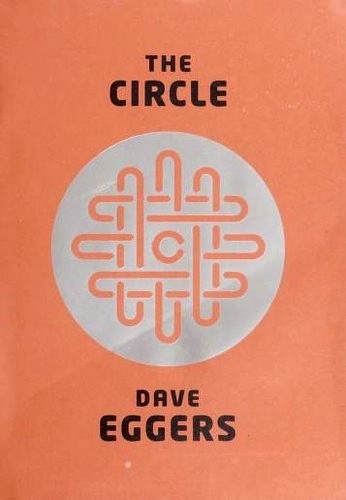
Cover of the Alfred A. Knopf first edition.