First in Time, First to Drink
Paolo Bacigalupi's Colorado River thriller reads more like reporting every summer, which is a shame, because the thriller is the weakest thing in it.
The shortage cuts, the paid-for tribal water and the suburb left dry have all happened, but Phoenix keeps growing and no state has yet put guns on its border with another.
On 21 August 2026, the US Secretary of the Interior, Doug Burgum, signed the rules that will decide who gets the Colorado River in 2027 and 2028. The press release said that Lake Powell and Lake Mead had both hit record lows in the preceding weeks, and that the two reservoirs together held less water than at any point since before Powell began filling in 1963. The guidelines cut deliveries to the three lower-basin states by 1.25 million acre-feet a year. If those states carry out the sharing deal they had proposed, Arizona takes 760,000 of that. Reclamation's own account of how the decision was reached is one dry line: consensus on long-term operations "did not materialize."
Eleven years earlier, Paolo Bacigalupi published a novel in which Arizona loses the river and Nevada keeps it. Reading The Water Knife in the autumn of 2026 is an odd experience. Its geopolitics now read like the minutes of a meeting. Its plot still reads like a novel, and not a very good one.
The world: a dry run
Bacigalupi is better at worlds than people, and this is his best world. The Water Knife grew out of "The Tamarisk Hunter", a short story first published in High Country News, the magazine of record for people who argue about Western water. It shows. The novel's future is built from the bottom up, out of plumbing and paperwork.
Texas has largely collapsed under drought and storms, and its refugees fill the ghettos of Phoenix. The western states have shut their borders and guard them with militias. Las Vegas survives because Catherine Case, who runs the Southern Nevada Water Authority and is known as the Queen of the Colorado, is willing to do anything to keep its taps on. Her rich residents live in the Cypress arcologies, sealed towers that recycle almost every drop. Phoenix's rich have the Chinese-built Taiyang. Everyone else drinks from Clearsacs, which turn urine back into drinking water, and buys the rest from people like Maria, who resells water to labourers when the price dips.
The details are the book's real pleasure. Phoenix's decline has become a genre, which the book calls collapse porn, and reporters feed it. And the most important object in the whole book is a legal document. Bacigalupi understood, earlier than most novelists, that a drought is not just a weather story. It's a property story. The person who wins is the person whose claim is oldest, and who can prove it.
The novel: a lesser Chinatown
The plot is where it goes wrong. Angel Velasquez is one of Case's "water knives", a fixer who makes sure that Nevada's water stays Nevada's. The novel opens in Carver City, Arizona, as Nevada National Guard helicopters wreck its water infrastructure and leave the town to die. Then Case sends Angel to Phoenix to find out why one of her undercover people has been killed. The trail leads to Jamie Sanderson, a Phoenix Water lawyer who found a set of senior water rights rooted in an old agreement with the Pima, tried to cash them in and was murdered for it. Two other narrators converge on the same rights: Lucy Monroe, a Pulitzer-winning journalist who has stayed in Phoenix too long, and Maria Villarosa, a teenage Texan refugee who sells water near the Taiyang and is trying to stay alive.
The comparison everyone reached for in 2015 was Chinatown. The Vintage paperback carries an NPR line on its cover, "Think Chinatown meets Mad Max", and the Los Angeles Times made the same comparison. It's a flattering trap. Chinatown works because its water plot stays half-hidden behind a family horror that's quieter and worse. The Water Knife has no such second layer. Its characters are what the plot needs them to be. Angel is the hard man with a buried conscience. Lucy is the reporter who can't leave. Maria is the survivor. Kirkus said, fairly, that they "sometimes slip into the uncomplicated types that inhabit a slick action movie", and that the plot "suffers from an excess of tidy coincidence." The biggest of those coincidences is that the rights everyone is killing for have been hidden in a copy of Cadillac Desert, Marc Reisner's history of Western water. It's a good joke for Reisner's readers and a creaky plot device.
Then there's the violence. Bacigalupi has never flinched, and here he doesn't even blink. Someone is mutilated to death. There's a gang boss called the Vet who feeds people to his hyenas. There's the sexual coercion that closes in on Maria, which the novel presents as a fact of life in a failed city but lingers on for longer than that requires. Some of it does earn its place, as a picture of what happens to the poor when the law moves elsewhere. Too much of it feels like the noir tradition's habit of proving its seriousness by hurting women. The final chapters are a flurry of double-crosses that move fast without ever feeling inevitable.
The prose is functional, often punchy and sometimes merely loud. That's the 5.9: a superb premise, carried by a serviceable thriller.
The prophecy: the paper, not the guns
As prophecy, The Water Knife is much better than it is as a novel. But it's right in the boring places and wrong in the exciting ones.
It's right that the cuts would come and that Arizona would take most of them. The first Level 1 shortage on the lower Colorado was declared in August 2021 and took effect in 2022, and Arizona lost 512,000 acre-feet that first year. It's right that the people on the fringe would be cut off first. On 1 January 2023, Scottsdale stopped selling hauled water to Rio Verde Foothills, an unincorporated community on its edge, and about 500 homes lost their main supply. Residents flushed toilets with rainwater. Five months later, Arizona stopped approving new subdivisions in parts of the Phoenix area that relied on groundwater.
And it's right, almost uncomfortably so, about the paper. The book's MacGuffin is a senior Native claim, and in reality one of the strongest hands in Arizona belongs to the Gila River Indian Community, home to the Akimel O'odham, long called the Pima by outsiders, and the Maricopa. Its 2004 settlement secured 653,500 acre-feet a year, one of the largest tribal water settlements in American history. In August 2022 its governor, Stephen Roe Lewis, pulled the community out of conservation agreements, saying, "We cannot continue to put the interests of all others above our own." By 2023 the federal government was paying the community tens of millions of dollars to leave water in Lake Mead. Bacigalupi imagined people killing over the rights. The reality is a negotiation, and it's paid for. The Supreme Court ruled in 2023 that the United States owed the Navajo Nation no duty to secure its treaty water, which shows that a right on paper is not water in the tap.
It's wrong about the guns. No state has closed its border to another, and the Supreme Court has held for decades that citizens choose states, not the other way round. The nearest thing is Texas's Operation Lone Star, which sent the state's National Guard to its border with Mexico. And it's wrong, so far, about Phoenix. In the year to July 2025, the metro grew by nearly 60,000 people. The novel's dying city is still a boom town. It's just a boom town on a ration.
That's the lesson The Water Knife teaches by accident. In the mid-2020s, the West's water war turned out to be fought by lawyers, in records of decision and settlement acts. Bacigalupi wanted helicopters. He was right about the river and wrong about the weapons.
What it predicted, and what happened
The Water Knife is most prescient about the dull machinery of scarcity: federally imposed Colorado River cuts, fringe communities left dry and senior tribal rights that the federal government now pays to keep in Lake Mead. It is wrong so far about the violence and the collapse. No state has closed its border to another, and Phoenix is still growing.
-
WK-1
As Lake Mead falls to record lows, the federal government imposes mandatory cuts on Colorado River deliveries to Arizona and the other lower-basin states.
Reclamation declared the first-ever Level 1 shortage at Lake Mead in August 2021, cutting Arizona's 2022 supply by 512,000 acre-feet. In August 2026, with Mead and Powell at record lows and no seven-state agreement, Interior imposed 2027-2028 guidelines that cut lower-basin deliveries by 1.25 million acre-feet a year. The novel's premise is now standing federal policy. 123
-
WK-2
Senior tribal water rights become the decisive asset in the fight over Arizona's water, and governments pay to control how they are used.
The Gila River Indian Community used its large settled entitlement as leverage in 2022, briefly pulling out of conservation agreements, and in 2023 the federal government agreed to pay it to leave water in Lake Mead. That is the novel's insight in negotiated rather than violent form. But a right on paper is not always water: the Supreme Court held in 2023 that the US had no duty to secure the Navajo Nation's treaty water. We expect tribal rights to become more central as the post-2026 cuts deepen. 456
-
WK-3
Homes on the fringe of metro Phoenix are cut off from their water supply, and new building there is halted for lack of water.
Scottsdale stopped selling hauled water to Rio Verde Foothills on 1 January 2023, leaving about 500 homes without their main supply, and in June 2023 Arizona stopped approving new groundwater-dependent subdivisions in parts of the Phoenix area. Both were partial and were softened later, and the metro as a whole has kept growing, so the novel's emptied city has not followed. 789
-
WK-4
Western states close their borders to one another and use armed guards to turn back climate refugees from Texas.
Large internal climate migration is widely projected, and Texas has shown a state will put its National Guard on a border, though only against people crossing from Mexico. Closing an interstate border to American citizens would run straight into the constitutional right to travel, which the Supreme Court reaffirmed in 1999. Nothing on the record suggests a path to this within 15 years. 101112
- FOR Reclamation announces 2022 operating conditions for Lake Powell and Lake Mead. US Bureau of Reclamation, 2021-08-16. First-ever Level 1 Shortage Condition at Lake Mead; Arizona loses 512,000 acre-feet in 2022, about 18% of its apportionment.
- FOR Interior Department Finalizes Plans for 2027-2028 Colorado River Operations. US Department of the Interior, 2026-08-21. Cuts of 1.25 million acre-feet a year for two years, 760,000 of them Arizona's under the lower-basin proposal, as both reservoirs hit record lows.
- CONTEXT Future Colorado River Operations - Decision Documents. US Bureau of Reclamation, 2026-09-01. Records that consensus on long-term operations did not materialise, so rules now run in two-year intervals.
- FOR An Arizona tribal community is selling the feds water from Lake Mead. Utah Public Radio / KUNC, 2022-10-19. Gila River pulled out of conservation agreements in August 2022, then offered to conserve up to 750,000 acre-feet over three years for federal payment.
- FOR Interior highlights $233M for Gila River Indian Community water conservation. WaterWorld, 2023-04-13. Up to $233 million in funding and agreements, including $50 million to leave water in Lake Mead.
- AGAINST Arizona v. Navajo Nation, No. 21-1484, opinion of the Court. Supreme Court of the United States, 2023-06-22. 5-4 ruling that the 1868 treaty imposed no duty on the US to take steps to secure water for the Navajo Nation.
- FOR As water dries up in Arizona community, residents use rainwater to flush toilets and plastic plates to avoid dishwashing. NBC News, 2023-01-19. Scottsdale cut off hauled water to about 500 Rio Verde Foothills homes from 1 January 2023, citing drought.
- FOR Arizona officials blame water supply for decision to not issue new housing permits near Phoenix. KAWC / Capitol Media Services, 2023-06-02. A state model found a 100-year groundwater shortfall of 4.9 million acre-feet, halting new subdivisions in fringe areas such as Queen Creek and Buckeye.
- AGAINST Permanent water solution arrives for Rio Verde Foothills after years of uncertainty. AZFamily, 2025-12-30. Supply was restored by October 2023 and a permanent EPCOR standpipe opened on 1 January 2026.
- CONTEXT Climate Change Will Force a New American Migration. ProPublica / The New York Times Magazine, 2020-09-15. Projects large internal migration away from heat and drought in the American South and Southwest.
- CONTEXT Operation Lone Star: All you need to know about latest US border flashpoint. Al Jazeera, 2023-08-09. Texas deployed its National Guard and floating barriers on the Mexican border, the nearest real case of a state militarising a border.
- AGAINST Saenz v. Roe, 526 U.S. 489 (1999). Legal Information Institute, Cornell Law School, 1999-05-17. The Court struck down California's residency rule as a violation of the right to travel between states.
Ledger updated 1 Nov 2026. See it on the Nearness Board · Method
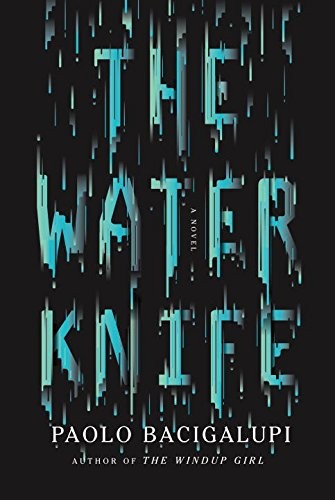
Cover of the Alfred A. Knopf edition.