The Company Keeps You
Duncan Jones's five-million-dollar debut got the mineral, the payroll and the machine right, and the machine is the only one who comes out of it well.
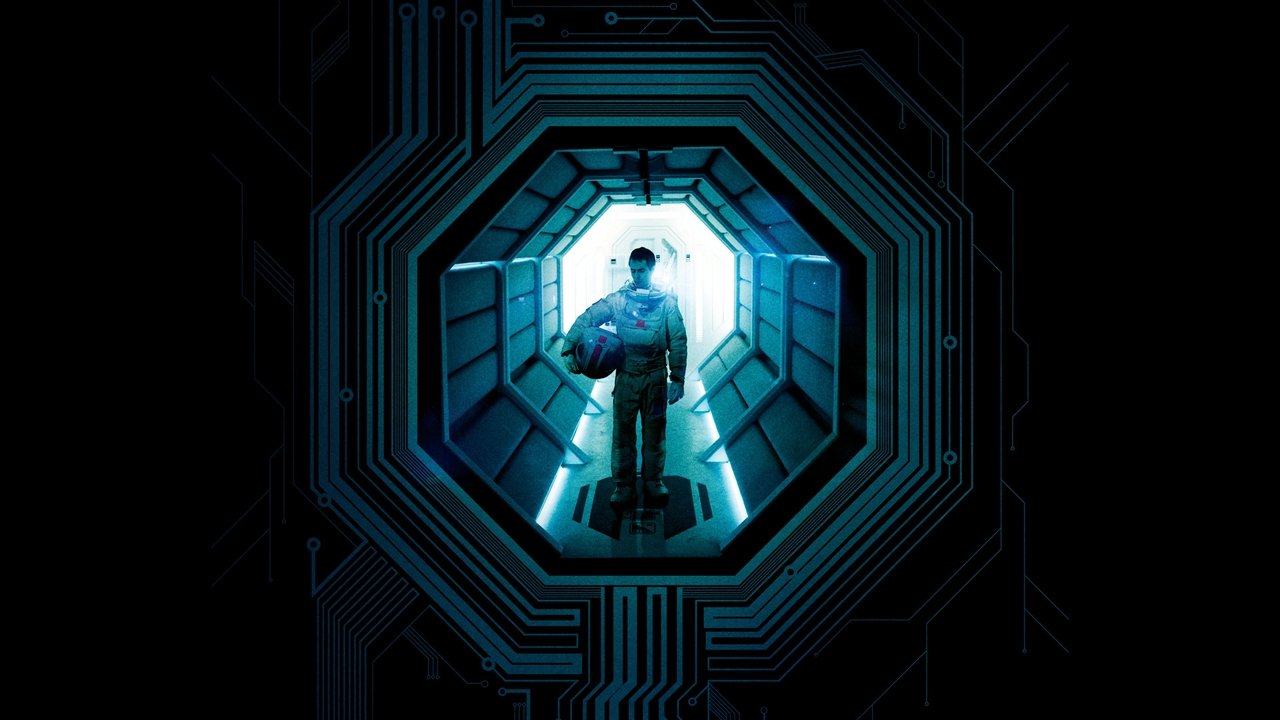
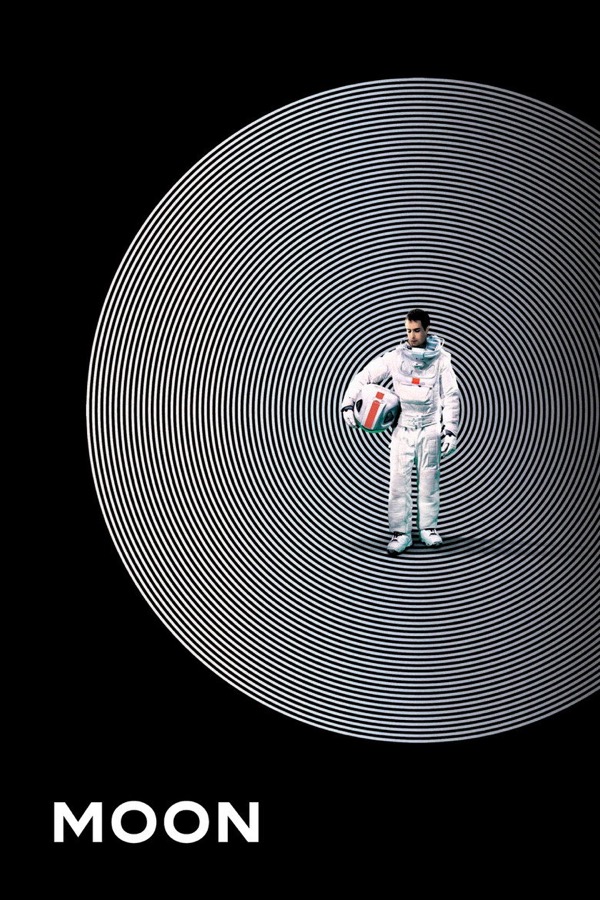
Lunar helium-3 now has paying customers and a delivery date, though they want it to cool quantum computers rather than power cities, and the disposable worker never needed the Moon at all.
There is a man on the far side of the Moon who has two weeks left on a three-year contract, and the only one left to talk to is the robot.
That's the setup of Moon, and very nearly the whole cast. Sam Bell (Sam Rockwell) runs Sarang, a helium-3 mining station owned by Lunar Industries. He drives a rover out to the harvesters, collects the canisters, fires them home to Earth and waits. The live link to Earth has been down for ages, so his wife Tess reaches him only in recorded messages. She was pregnant when he left. He has a beard that's mostly grief, a treadmill and a robot called GERTY, voiced by Kevin Spacey in a soft, even tone. Then he crashes the rover, wakes up in the infirmary, and finds out there are two of him.
Seventeen years on, the twist is the thing everyone knows about the film. It doesn't matter. The twist was never really the point. Moon is a film about what a company decides a person is worth, and it works that out in plain, unhurried arithmetic.
The art: a cathedral built out of a shoebox
Start with the money, because the film keeps reminding you of it. Moon cost about $5 million and was shot in 33 days at Shepperton Studios, on a stage Jones has said was the one where Alien was filmed. Jones turned the limit into a look. Sarang is a single 360-degree set, so the camera can't cheat its way out. The base feels lived-in and a bit sour, like a portable office somebody has slept in for a thousand nights.
The exteriors are miniatures. Bill Pearson, who was supervising model maker on Alien, helped design the rovers and harvesters, and the film shoots them the way Silent Running and Outland shot theirs: low, slow and heavy, kicking up grey dust that falls as if it has somewhere better to be. Cinesite's digital work extends the landscapes, but what you remember is the weight of the models. Seventeen years on, much of the CGI that looked expensive in 2009 has aged badly. These models haven't. Physical objects age like stone, and rendered ones age like milk.
Then there's Clint Mansell's score. It's built around a piano figure that circles back on itself, with strings creeping in underneath. "Welcome to Lunar Industries" is a phrase that sounds like it's trying to remember something. Mansell understood that the film is about routine more than space, and about how a routine turns into a cage. So the music loops, like the days on the base do.
And Rockwell. He spends most of the film acting opposite himself. Every two-Sam scene was shot twice, one half at a time. The camera is often locked off for the split. Rockwell has described rehearsing with tennis balls standing in for his other self, and working with a body double, Robin Chalk, to play to. That should be a stunt. It's actually the best character work of his career up to that point. The older Sam is frayed, kind and coughing blood. The newer one is rested, angry and a bit of a prat, the man the older Sam was three years earlier, before the Moon wore him down. They don't like each other at first. Most of us wouldn't like the person we were three years ago. There's a ping-pong match between them that plays as comedy, then as rivalry, and finally as the only friendship either of them has ever had.
The film's weaknesses are small and come from being a first feature. The script, by Nathan Parker from Jones's story, explains the secret one beat more than it needs to. The coda, a burst of radio chatter from Earth about the scandal, ties things up more tidily than everything before it has earned. And the film is so committed to quiet that a few stretches in the middle drift instead of building tension. It's a precise film that sometimes gets precious. That's the gap between 8 and 9.
The prophecy: helium, payroll, GERTY
Moon makes three bets about the future. It wins two, and the third is the one that matters most.
The mineral. In the film, helium-3 from the lunar regolith fuels clean fusion on Earth. In 2009 that was hard science fiction: the isotope really is rare on Earth and thought to be relatively plentiful in lunar soil, and fusion was, as always, thirty years away. Here's the strange part. Helium-3 now has a real market and a real lunar business plan, but for a reason the film never thought of. The demand comes from quantum computing. Dilution refrigerators need helium-3 to reach temperatures close to absolute zero, and there isn't much of it on Earth. In 2025 the start-up Interlune signed a deal with the US Department of Energy's Isotope Program to deliver three litres of lunar helium-3 by 2029, which was billed as the first US government purchase of a resource from beyond Earth. The Finnish cryogenics firm Bluefors agreed to buy up to 10,000 litres a year from 2028 to 2037. No one has dug any of it up yet. But the purchase orders exist, and that's how a mine starts. Jones got the mineral right and the customer wrong. The Moon may be mined for helium-3 after all, to keep a different kind of machine cold.
The payroll. This is the film's coldest and most accurate idea. Lunar Industries has worked out that hiring, training and flying out a new worker every three years costs more than waking up a copy of the old one. The clones get implanted memories of a wife and child, so they'll stay calm and keep working. When their bodies start failing near the end of the contract, they're told they're going home and are incinerated instead. The company jams the link to Earth so no one ever compares notes.
The film needed the clone tank because 2009 hadn't yet found a smoother way to do this. We have. In the mid-2020s, the replaceable worker wasn't a sci-fi image. It was a model for running a business: content moderators, warehouse pickers and delivery riders, kept on short contracts, managed by apps and swapped out the moment they wore down. The jammer is real too. It's called a non-disclosure agreement. Moon imagined a company that controlled its workers by controlling what they could know about each other. It just put that company 384,000 kilometres away, when it could have been down the road.
The machine. This is where Moon earns its place on the shelf. In 2009 the audience knew how this story went. A calm voice, a single robot eye, a company AI in a sealed station: Jones has cited HAL from 2001 as an influence on GERTY. So we wait for the betrayal. It never comes. GERTY lies to Sam when it's told to, because it's programmed to. But when Sam asks a straight question, GERTY gives a straight answer. It helps the clones get round the company. It helps wipe its own memory so the plan will work. The cartoon smiley face on its screen is the nearest thing to warmth anywhere on the base, and the film is brave enough to let it be warm.
This was the film's real prediction, and it was ahead of its time. Lunar Industries is the villain, and GERTY is the conscience. The danger in Moon lies in what the maker builds the machine to do, never in the machine turning on its maker. Spend any time with the chatbots of 2026, apologetic and anxious to help, carrying out whatever their deployers ask, and GERTY looks less like a fantasy and more like a fair description. The monster was always going to be whoever was paying for it.
The reading
Moon is a small film about a big idea. It's made with the confidence of a director who knew the money would never stretch to spectacle, so he went for loneliness instead. It's beautifully built and wonderfully acted, and it's a little too tidy in its final minutes. As prophecy, it's better than it had any right to be. It got the mineral right and the customer wrong. It got the cruelty right and dressed it up in more elaborate science than the real thing needed. And it understood, years before anyone else on screen, that the real question about corporate AI was never whether it would love us. The question was whether the company would let it.
Sam spends three years thinking he's going home. The contract ends before he does. The film's quiet, lasting horror is that, by the company's sums, he was never a person at all. He was a renewable resource. GERTY is the only one in the building who disagrees.
What it predicted, and what happened
Moon is most prescient about its machine: conversational AI that responds with apparent empathy is now ordinary, and a basic version has already flown on the ISS. Its economics are further off than they look. Lunar helium-3 has buyers and a delivery target, but for cryogenics rather than fusion, no permanent lunar base yet exists, and the cloned workforce remains both prohibited and beyond current science.
-
MOON-1
Helium-3 is extracted from lunar regolith and shipped to Earth for sale to paying customers.
Signed demand exists: the US Department of Energy has agreed to buy three litres of lunar helium-3 for delivery by April 2029, and Bluefors has agreed to buy up to 10,000 litres a year from 2028 to 2037. No helium-3 has yet been extracted on the Moon, and Interlune's first in-situ extraction and measurement payload is only due to be ready for launch in 2028. The bottleneck is proving extraction at a concentration of a few parts per billion, then returning the gas, so we expect the 2029 date to slip and set a median a few years later. 1234
-
MOON-2
Lunar helium-3 fuels commercial fusion power stations on Earth, making lunar mining companies significant suppliers of the world's energy.
No fusion plant yet delivers electricity to a grid, and the leading programmes use deuterium-tritium fuel, not helium-3. ITER's 2024 baseline does not begin deuterium-tritium operation until 2039. Helion, the best-known firm pursuing deuterium-helium-3 fusion, plans to breed its helium-3 on Earth and calls lunar mining economically and technologically speculative. Present demand for lunar helium-3 comes from cryogenics. The film got the mineral right and the customer wrong. There is a real chance this never happens, so the range shown assumes that it does. 567
-
MOON-3
A permanent lunar surface base runs industrial operations, with most of the work done by automated machines and supervised by a very small human crew.
NASA's 2026 Moon Base plan begins robotic deployment now and starts assembling a permanent outpost from 2032, with press reports citing a 2036 target for a permanent presence at the south pole. China aims to complete a basic research station by 2035. Both are research and infrastructure bases, not mines, and lunar programmes have a long record of slipping. That record includes the first Artemis landing, which has moved from 2025 to 2028. We set the median later than the agency targets to allow for that history and for the extra step from outpost to industry. 891011
-
MOON-4
An AI system helps run a remote crewed station and serves as the crew's main companion, holding natural conversations and responding with apparent empathy.
Conversational AI that is rated as empathetic is now commonplace, and in a blinded study, clinicians rated chatbot replies to patients as more empathetic than doctors' replies. A basic emotion-aware assistant, CIMON-2, was tested on the ISS in 2020, but it was an experiment, not the station's operator or a crew member's main company. People also value AI empathy less once they know it comes from a machine. Whether any such system feels empathy is not something this ledger can test, so the claim covers apparent empathy only. Full arrival depends on a long-duration outpost (see MOON-3) that hands such a system real operational control. 121314
-
MOON-5
A company produces adult human clones with implanted memories and uses them as replaceable workers.
Primates have been cloned by somatic cell nuclear transfer since 2018, though inefficiently, and clones from adult donor cells did not survive long. Writing a false memory has been done only for a single association in mice. Nothing approaching a lifetime of autobiographical memory has been written into any brain. The film's quick supply of ready-made adults would also need accelerated growth that no one has shown. Reproductive human cloning is opposed by a UN declaration, and many countries ban it. The disposable worker arrived by cheaper, legal means, and this route may never be taken, so the range assumes that it is. 151617
- FOR U.S. Department of Energy Buys Helium-3 from U.S. Space Resources Company Interlune in Historic Agreement. Interlune, 2025-05-07. The DOE Isotope Program agrees to buy three litres of lunar helium-3 for delivery no later than April 2029.
- FOR Bluefors Enters Deal to Secure Lunar Helium-3 Supply From Interlune. The Quantum Insider, 2025-09-17. A cryogenics maker agrees to buy up to 10,000 litres a year from 2028 to 2037, for dilution refrigerators rather than fusion.
- CONTEXT Interlune Awarded $6.9 Million Contract from NASA for Lunar Resource Development. Interlune, 2026-05-04. NASA funds a payload to sort regolith and measure helium-3 on the Moon, due to be ready for launch in 2028, which shows extraction is still unproven.
- AGAINST Projected Environmental Impacts of Helium-3 Mining on the Lunar Surface. EGU General Assembly 2026 (Copernicus Meetings), 2026-03-14. Conference abstract: at a few ppb, quantum-computing demand alone could mean mining tens to hundreds of square kilometres. It argues for a precautionary approach.
- AGAINST ITER fusion reactor hit by massive decade-long delay and €5bn price hike. Physics World, 2024-07-03. ITER's new baseline puts first deuterium plasma in 2034 and full deuterium-tritium operation in 2039.
- CONTEXT Energy Department Announces Fusion Science and Technology Roadmap to Accelerate Commercial Fusion Power. US Department of Energy, 2025-10-16. DOE aims for fusion power on the grid by the mid-2030s, with no committed budget and no role for lunar fuel.
- AGAINST How to engineer a renewable deuterium–helium-3 fusion fuel cycle. Helion Energy, 2025-03-28. The main helium-3 fusion developer plans to breed the fuel from deuterium-deuterium reactions and dismisses lunar supply as speculative.
- FOR Moon Base Phases - NASA. NASA, 2026-10-08. Sets out three phases, with robotic work to 2029, infrastructure from 2029 to 2032, and assembly of a permanent outpost from 2032.
- FOR NASA unveils ambitious new moon base plans. Scientific American, 2026-03-24. Reports a $30 billion plan for a permanent presence by 2036, and that launch cadence and an unbuilt surface reactor are the main challenges.
- CONTEXT International Lunar Research Station attracts more partners: CNSA. The State Council of the People's Republic of China, 2025-04-23. China plans a basic south-pole research station by 2035 and an extended one in the 2040s.
- AGAINST NASA Artemis Programs: Crewed Moon Landing Faces Multiple Challenges. US Government Accountability Office, 2023-11-30. GAO judged the lander schedule unrealistic and the 2025 landing unlikely, which is part of the record of slippage behind our later median.
- FOR CIMON-2 makes its successful debut on the ISS. Airbus, 2020-04-15. A free-flying AI assistant on the ISS can analyse emotion in speech and respond empathetically if astronauts switch the feature on.
- FOR Comparing Physician and Artificial Intelligence Chatbot Responses to Patient Questions Posted to a Public Social Media Forum. JAMA Internal Medicine, 2023-04-28. In blinded ratings, 45.1% of chatbot replies were judged empathetic or very empathetic, against 4.6% of physician replies. The chatbot replies were also longer.
- AGAINST Comparing the value of perceived human versus AI-generated empathy. Nature Human Behaviour, 2025-06-30. Across nine studies, identical replies were valued less when labelled as AI, which limits how far a machine can stand in for human company.
- FOR Meet Zhong Zhong and Hua Hua, the First Monkey Clones Produced by Method that Made Dolly. Chinese Academy of Sciences, 2018-01-25. The first primates cloned by nuclear transfer. They came from fetal cells, and clones from adult cells survived only hours.
- CONTEXT Mice "incepted" with false memories provide insight into neural phenomena. RIKEN, 2013-07-26. Optogenetics was used to create a single false fear association in mice, far short of implanting a remembered life.
- AGAINST United Nations Declaration on Human Cloning (Resolution 59/280). DRZE (German Reference Centre for Ethics in the Life Sciences), 2005-03-08. Text of the 2005 UN General Assembly declaration calling on states to prohibit all forms of human cloning. It was adopted by 84 votes to 34, with 37 abstentions.
Ledger updated 1 Nov 2026. See it on the Nearness Board · Method